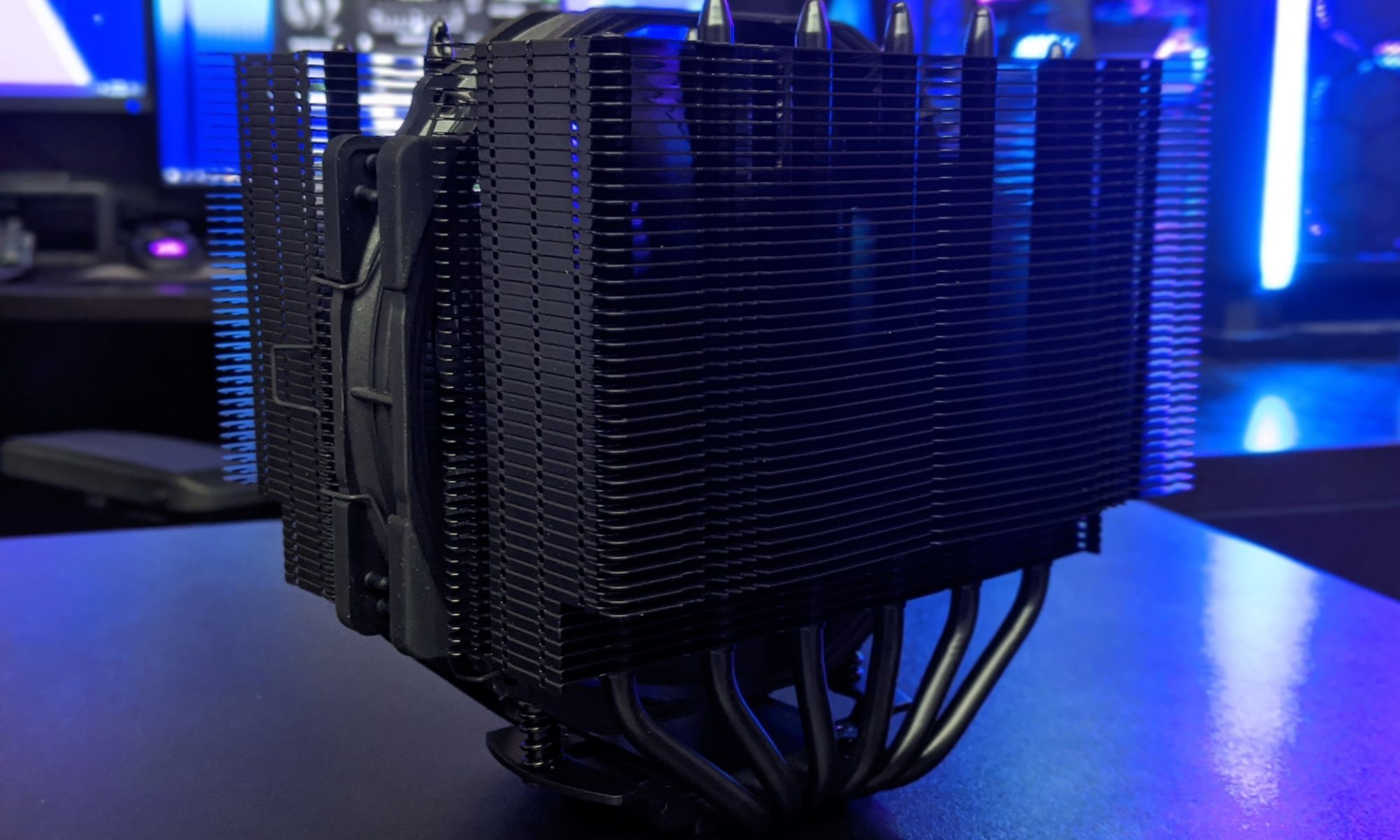
Air cooler clearance troubles: fitting RAM and side panels without headaches
Air cooling seems dead simple until you try to close the case. The tower sits over the CPU socket, the fan pushes air through the fin stack, and everything in the path needs a few millimetres to spare. When that gap disappears, builders in Brisbane and Melbourne find their rigs either refusing to boot, refusing to close, or running hot because a fan was deleted to make room. Australia has its own quirks here, between blistering summer afternoons that push case thermals higher and a retail market that stocks specific SKUs the US rarely sees, so clearance planning pays off before the screwdriver comes out.
This piece walks through where clearance actually breaks, how to measure the bits that matter, and what to do when the cooler you already bought won't behave. The same principles apply whether you're piecing together a new rig at a Perth workstation or squeezing a Noctua NH-D15 into a tighter-than-expected mid-tower that turned up at your door.
Where clearance problems actually start
Clearance failure almost always traces back to three measurements that nobody writes on the box. Cooler height versus case side panel clearance, cooler width versus RAM heat spreader height, and front-fan overhang versus the nearest DIMM slot. Most ATX mid-towers on the Aussie market advertise 165 to 175 mm of CPU cooler clearance, which sounds generous until a dual-tower cooler with two 140 mm fans arrives at 165 mm tall and leaves the side panel bowing outward.
The second number catches people out even more often. RAM with decorative heat spreaders regularly measures 40 to 50 mm tall, and a tower cooler with its front fan positioned ahead of the fin stack needs roughly 32 to 38 mm of vertical room to clear the spreaders. Push the DIMMs into slots one and two on a board with the 24-pin shroud on the right, and the gap shrinks further because the fan clips in front of the slot rather than above it. The maths gets unforgiving fast, particularly when the motherboard sits closer to the side panel in mATX and Mini-ITX cases where every millimetre matters.
A third, quieter issue lives in the back of the case. Many cheaper mid-towers ship with raised standoff locations near the rear exhaust, and a tall cooler combined with thick rear I/O shrouds can shove the heatsink fins into the side panel. Side panels flex slightly, glass less so, which is why tempered glass panels turn minor contact into a cracked pane and a warranty claim.
RAM heat spreaders and the front fan dance
Heat spreader height is the single biggest variable in this whole puzzle. Low-profile kits like those sold under Crucial's Ballistix line, or G.Skill's Ripjaws SO-DIMM-styled "Low Profile" series, sit around 30 to 34 mm tall and stay out of a tower fan's way. Tall kits from Corsair's Dominator Platinum RGB or G.Skill's Trident Z Royal can hit 50 mm, which forces users to either run the cooler without its front fan (losing 30 to 40 percent of the cooler's rated capacity) or remove the spreaders entirely.
Australian summers make that performance drop painful. A 42°C day in Adelaide or a humid 35°C arvo in Sydney pushes case intake temperatures well above what cooler reviews from cooler climates capture. Deleting a fan at the same time your ambient climbs means the chip you planned to keep cool is now sitting at the edge of thermal throttle during a long render or a sustained gaming session. The thermal equation changes when your lounge room sits at 30°C for half the year.
Motherboard layout adds another wrinkle. Boards with the M.2 slot and 24-pin shoved under a massive plastic shroud — and there are plenty of those on shelves at JB Hi-Fi and Scorptec — push the first DIMM slot closer to the CPU socket. That shift of 5 to 8 mm forces the front fan over slot two or even slot three, which is rarely populated in a 32 GB build. Slot two's spreader will be exactly where the fan wants to sit, so the spreader ends up either replaced or removed.
Side panel clearance and the tempered glass crunch
Tempered glass side panels changed the clearance game about five years back and they haven't let go since. Steel panels flex. Glass doesn't. A side panel that needs 3 mm of clearance to close safely with steel might need 5 to 6 mm with tempered glass, because the panel sits on locating pins that can chip if forced, and the rubber gasket around the edge compresses unevenly when the cooler is leaning toward it.
The 4 mm thickness most manufacturers now ship adds another 4 mm of dead space at the panel itself, which doesn't sound like much until the cooler is also leaning 2 mm because the mounting pressure wasn't even. There's a useful explainer on mounting pressure and torque that walks through why a cooler can sit slightly off-centre after installation, and that drift is exactly what pushes the top of the fin stack into the panel when tolerances are tight. Getting the cooler perfectly perpendicular to the motherboard is what saves the glass.
Mesh side panels offer a bit more forgiveness because they're usually steel with a thin dust filter stuck to the inside, and they'll give a millimetre or two without complaint. Several Australian-favourite cases like the Fractal Design Meshify 2 and the Lian Li Lancool II Mesh ship this way, which is partly why they've stuck around on the recommended lists at Mwave and Centre Com for years. If you're building in summer and intend to run the case fan-heavy, mesh is the smarter play for both thermals and tolerance.
Workarounds once the parts are already in the lounge room
Sometimes the parts arrive, the cooler won't fit, and the cooler is going back isn't an option. Three workarounds consistently work for an Australian builder who'd rather not wait two weeks for a replacement from an overseas warehouse.
The first is the single-fan configuration. Most dual-tower coolers ship with two fans clipped in series. Removing the front fan, which is the one interfering with RAM, costs you measurable cooling performance but lets the build close. The remaining fan pulls air through one tower and exhausts it backwards, which still beats a stock Intel cooler by a wide margin. On an NH-U12S or a be quiet! Dark Rock 4, single-fan mode is genuinely livable.
The second is the offset mounting bracket, which Noctua and a few others sell as an accessory. The bracket shifts the cooler 5 to 7 mm toward the rear exhaust, away from the DIMM slots. That's enough to clear most 44 mm spreaders without losing the front fan. Local stock of the NM-i7 offset kit is patchy at JB Hi-Fi but reliable at Scorptec and PC Case Gear, where the staff usually know what you're chasing if you walk in with the cooler model in your hand.
The third is RAM swap. Tall RGB spreaders are a luxury when clearance matters. A pair of 32 GB DDR5-6000 kits with low-profile spreaders is on the shelf at most Aussie retailers, costs roughly the same as the showy kits once GST is included, and removes the conflict entirely. It's the path of least resistance when the cooler is already paid for and the DIMMs haven't shipped yet.
Shopping smart in the Australian market
Aussie retailers list cooler clearance and RAM height in the specs more often than not, but the numbers don't always tell the truth. Centre Com, Scorptec, Mwave, Umart, and PC Case Gear all publish case specs that include CPU cooler height and GPU length, and that's the table to check before the wallet opens. RAM height is rarer in the spec sheets but is usually answered in the questions section under each product, because someone has already asked.
Pricing in AUD swings with the dollar, and right now the landed cost of premium air coolers runs 20 to 30 percent above US RRP once GST and shipping are factored in. That makes the choice between a $130 cooler that almost fits and a $160 cooler that does fit less painful — the difference between returning a unit at your own postage cost and having a build that closes first go. PC Case Gear's Brisbane warehouse usually ships same-day if the order is in before lunch AEST, which matters when you're mid-build and the case is sitting open on the desk.
The other reality is stock depth. Australian warehouses carry maybe 30 to 50 air cooler SKUs at any given moment, compared with the hundreds on Newegg. If a niche cooler is the only thing that will work, expect a wait. For most builds, choosing from the SKUs that are actually in stock at a local retailer, then verifying clearance on paper before clicking buy, is how you avoid ending up with a fin stack touching glass.