How to build a silent HTPC with passive cooling and Noctua fans
A home theatre PC can be quieter than a streaming box, more flexible than a smart TV, and powerful enough for local media, emulation, gaming, and high-bitrate 4K playback. The difficulty is keeping that flexibility without adding the familiar soundtrack of small fans ramping up whenever a film starts or a download runs.
The most reliable approach combines passive cooling where it makes sense with carefully controlled airflow from large, slow-spinning Noctua fans. A completely fanless computer is possible, but it usually requires strict power limits, a spacious case, and hardware selected around thermal efficiency rather than peak benchmark performance.
For Australian homes, the design also needs to account for hot summer rooms, dust, long viewing sessions, and the higher cost of electricity. A quiet HTPC for a Melbourne study may need a different thermal margin from one installed in a Brisbane lounge room, but the underlying principles are the same: reduce heat at the source, give it an easy path out, and avoid unnecessary fan speed changes.
Start with a low-heat hardware platform
The processor determines much of an HTPC’s acoustic behaviour. A modern desktop CPU with a 35W or 65W configurable power limit is generally a better starting point than a high-end model designed for sustained rendering. Video decoding is handled efficiently by current integrated graphics, so the CPU does not need to work hard when playing HEVC, AV1, or 4K HDR content.
An integrated GPU is also attractive because it removes a major source of heat and noise. If discrete graphics are required for gaming, choose a low-power card with a large heatsink and a zero-RPM idle mode. A passively cooled GPU can work for media playback, but it needs generous case ventilation and should not be expected to run demanding games in a confined cabinet.
Undervolting and power limiting can make a large difference without noticeably reducing media performance. In the BIOS, set a sensible package power limit, enable modern idle states, and test stability with a sustained workload. For an AMD system, Eco Mode is a straightforward option; Intel platforms can use reduced PL1 and PL2 limits. The aim is a cooler silicon package that spends most of its time below the point where fans need to accelerate.
Choose a case that supports quiet airflow
A silent HTPC case should provide open intake and exhaust paths rather than prioritising an ultra-thin shape. Perforated panels, removable dust filters, and room for 120mm or 140mm fans are more useful than a narrow enclosure that looks like traditional AV equipment. A larger case can also let a passive heatsink operate effectively by natural convection.
Check the position of the motherboard, graphics card, and power supply before buying. A vertical GPU can improve clearance in some layouts but may restrict the card’s intake if it sits close to a glass panel. This vertical GPU guide is useful when comparing riser-based layouts and checking whether the graphics cooler will actually receive fresh air.
For a living-room installation, measure the cabinet rather than relying on the advertised case dimensions. Leave space above and behind the enclosure for warm air to escape, and avoid placing it directly against a wall. In Australian homes, entertainment units often sit beneath televisions with limited rear clearance, which can turn a low-power system into a heat trap during a January afternoon.
Build the passive cooling path
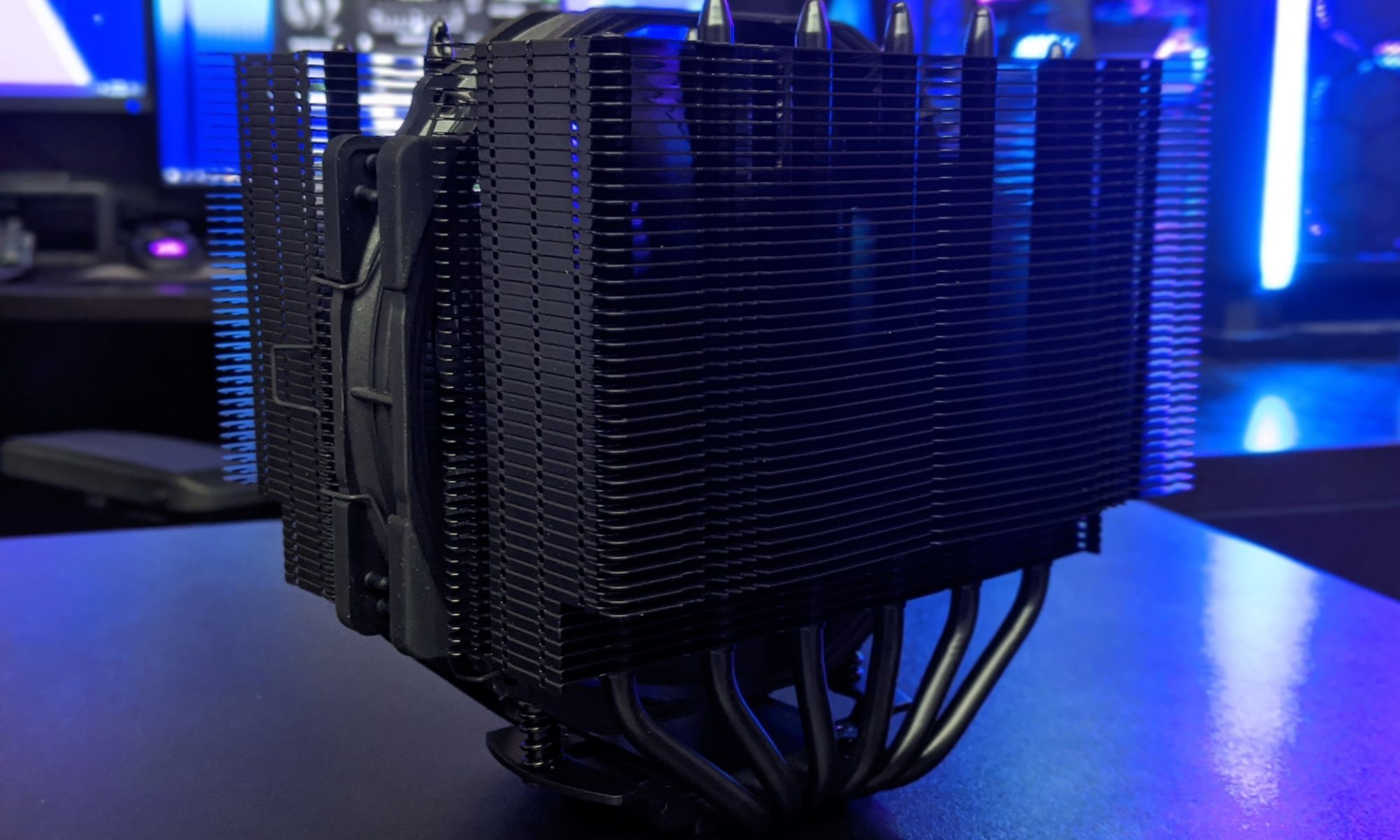
Passive cooling works best when the heatsink is large, the heat source is modest, and air can move naturally through the fins. A tower-style CPU heatsink with widely spaced fins is usually more effective than a compact low-profile model. Orient the fins so that warm air can rise towards the top exhaust area, where the case layout allows it.
A fanless power supply can reduce noise further, but it is not automatically the best choice. Passive PSUs are expensive, have limited capacity, and may transfer additional heat into the case. A high-quality semi-passive unit with a quiet fan and a generous efficiency rating can be the better compromise. It will often remain fanless during video playback while providing more thermal headroom during gaming or maintenance tasks.
Storage is another source of unwanted vibration. NVMe storage eliminates mechanical noise and reduces cable clutter, although a SATA SSD is also silent in operation. Avoid placing a spinning hard drive inside the main enclosure if the HTPC is intended for a bedroom or quiet lounge. Network storage, USB backup drives, or a NAS located elsewhere can handle large media libraries without adding vibration to the playback system.
Use Noctua fans at low speed
Noctua fans are well suited to a quiet HTPC because their motors remain smooth at low speeds and their acoustic profile is generally unobtrusive. A 120mm or 140mm model running at 400–700rpm can move enough air for a low-power system while producing very little noise. Larger fans are preferable when the case supports them because they can deliver comparable airflow at a lower rotational speed.
Use one slow intake and one slow exhaust fan as a starting point. More fans do not necessarily make a system quieter; they add motors, turbulence, and additional control points. If the case has a filtered front intake, place the intake low and the exhaust high or at the rear. A slightly positive internal pressure, created by marginally higher intake airflow, can reduce dust entering through unfiltered gaps.
Connect the fans to motherboard headers with a proper PWM curve rather than running them at full speed. Set a low minimum speed that the fan can maintain reliably, then increase speed gradually as CPU or motherboard temperature rises. A broad temperature hysteresis prevents rapid cycling when a television menu opens or a background task briefly loads the processor.
Noctua’s low-noise adapters can help, but BIOS fan control is usually more flexible. Test the finished system with the television muted and the room quiet. Electrical motor noise, bearing sounds, and case resonance can be easier to detect at night than during daytime testing.
Tune thermals, software, and playback
The operating system should avoid unnecessary background activity. Disable startup programs that are not needed, schedule indexing and large updates for times when the system is unused, and configure sleep behaviour for the media centre software. Hardware-accelerated decoding should be enabled so that the integrated GPU handles supported video formats efficiently.
Linux is a strong option for a custom HTPC, especially when paired with Kodi, Jellyfin, or a lightweight desktop environment. The Ubuntu Podcast offers useful Linux news and community discussion for builders considering an Ubuntu-based media setup. Windows remains convenient for certain streaming services, game launchers, and HDR configurations, so the best choice depends on the services and controller support required.
Monitor temperatures while the system is under realistic loads. Playing a 4K HDR file for an hour is more informative than a short synthetic benchmark, but also test large file transfers, software updates, and any games the machine will run. A CPU temperature in the 60s or 70s under media workloads leaves useful room for hotter days, while a system that regularly reaches thermal limits needs better airflow or lower power targets.
Audio output deserves attention as well. HDMI from the motherboard or graphics card can carry surround formats and avoids a separate noisy receiver or sound card. Configure the television or AV receiver to handle passthrough where appropriate, then check that the HTPC does not wake fans unnecessarily when changing refresh rates or display modes.
Validate the system in its final location
Noise testing should happen after the HTPC is installed in its cabinet, not only on an open workbench. Furniture changes both airflow and perceived sound. A faint fan tone can become more noticeable when reflected from a timber shelf, while vibration can travel through the cabinet and make a nearly silent computer seem louder than it is.
Use rubber feet, soft mounting points, and properly tightened panels to control resonance. Keep cables away from fan blades and make sure dust filters are seated correctly. Australian homes can accumulate fine dust quickly, particularly during dry weather or when windows are open, so filters should be checked every few months. Homes near busy roads or coastal areas may require more frequent cleaning.
Room temperature is an important part of the design. A passive heatsink that performs well in an air-conditioned office may struggle in an uncooled Brisbane room, while a Melbourne system can face large seasonal changes. Allowing extra thermal margin is sensible because the quietest fan curve is useless if it forces the processor to throttle during a heatwave.
Local pricing also affects the build. Compare Australian retailers such as Scorptec, Centre Com, Umart, and MSY, and check warranty terms before choosing a premium fanless power supply or specialist case. A modestly priced case with standard 140mm mounts can deliver a quieter result than an expensive slimline enclosure that requires tiny high-speed fans.
Balance silence with upgrade flexibility
A silent HTPC should be designed around its actual workload rather than an idealised specification sheet. If the machine will stream, store photos, emulate older consoles, and play a few lightweight games, integrated graphics and a passive CPU heatsink may be all that is required. If it will also edit video or play modern titles, a semi-passive GPU and carefully controlled Noctua airflow offer a more practical balance.
Liquid cooling is usually unnecessary for this type of build. Large radiators can reduce peak temperatures, but pumps introduce a constant mechanical sound and can eventually fail. The Arctic 420 review illustrates the scale and purpose of a high-capacity AIO, which is aimed at demanding desktop workloads rather than a low-power living-room computer.
The ideal result is a system that disappears during playback: no fan surges during a film, no hard-drive vibration through the cabinet, and no thermal throttling when the room warms up. Passive heatsinking handles the easy hours, while large Noctua fans provide nearly inaudible assistance when the Australian summer or a heavier workload demands extra airflow.