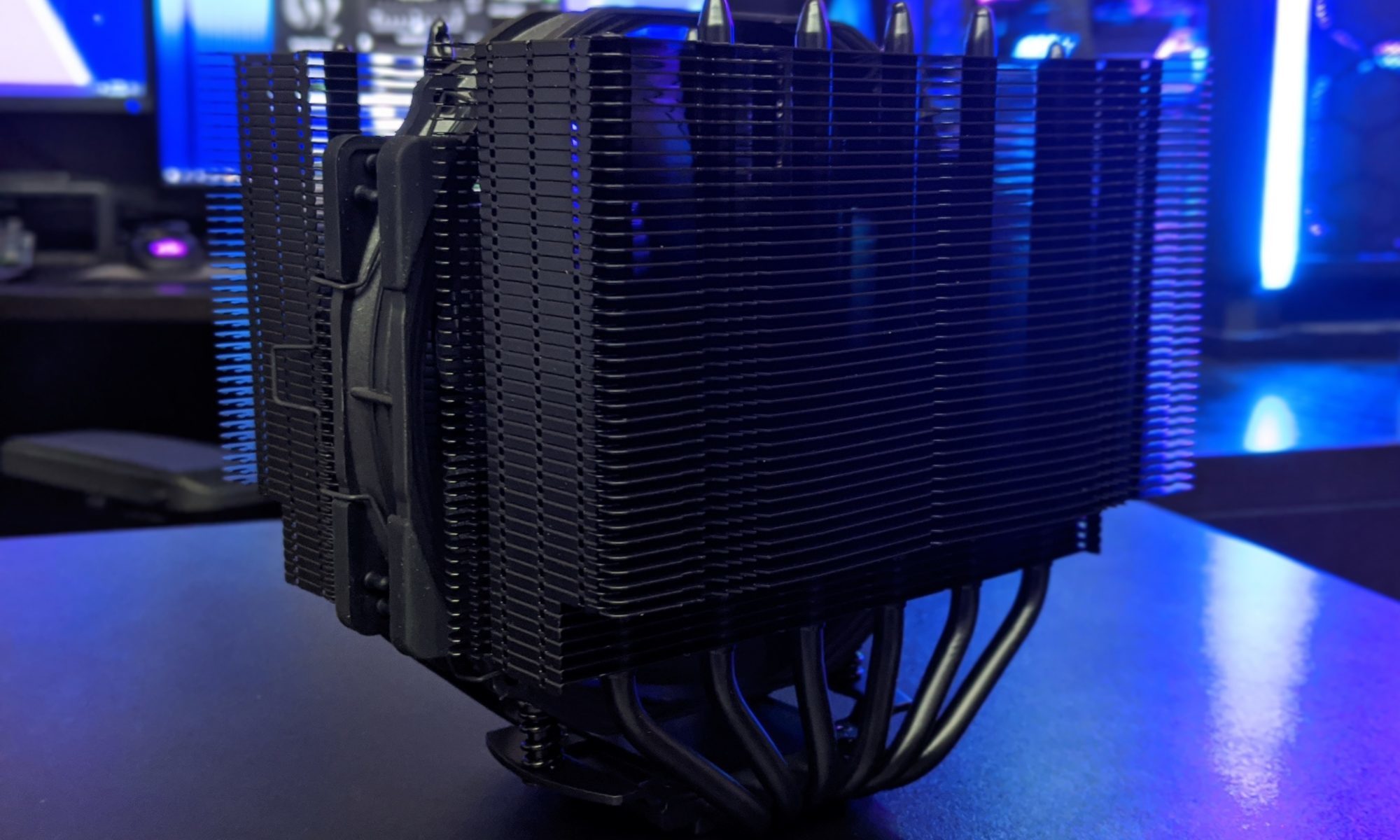
Noctua NH-D15 G2 Vs Be Quiet! Dark Rock Pro 5
Large dual-tower air coolers remain compelling for high-performance desktop systems. They avoid pump noise, reduce long-term mechanical complexity, and can handle demanding processors without the installation concerns associated with liquid cooling. The Noctua NH-D15 G2 and be quiet! Dark Rock Pro 5 represent two of the strongest options in this category.
Both coolers use a twin-stack heatsink design with a large central fan and a front fan that pushes air through the first fin tower. Their goals are similar, but their engineering priorities differ. Noctua emphasizes refined fan performance, mounting flexibility, and broad thermal consistency, while be quiet! focuses on a stealthier appearance, straightforward installation, and low acoustic output.
The right choice depends on processor power limits, case clearance, memory height, and price. Detailed testing from Hardware Hounds can help place these specifications in context, but the design differences already reveal how each cooler is likely to behave in a real gaming or workstation build.
Design And Build Quality
The NH-D15 G2 is a substantial successor to Noctua’s original NH-D15. It uses two dense fin stacks, a copper base with nickel plating, and a pair of NF-A14x25r G2 PWM fans. These fans are a major part of the cooler’s appeal, combining high static pressure with a wide control range and carefully shaped blades designed to reduce turbulence.
Noctua offers the NH-D15 G2 in a familiar brown-and-beige finish, alongside a black chromax.black version. The standard model is visually distinctive, though it may clash with systems built around dark components or RGB lighting. Its build quality is excellent, with sturdy fin assemblies, strong fan clips, and a mounting system that feels designed for repeated installation.
The Dark Rock Pro 5 takes a more understated approach. Its black-coated towers and fans blend easily into most cases, and the top cover conceals much of the exposed heatsink hardware. be quiet! uses a mix of 120 mm and 135 mm Silent Wings fans, with a physical speed switch that lets users choose between a quieter mode and a higher-performance mode.
Thermal Performance
Under sustained all-core workloads, both coolers are capable of handling modern high-end processors when the motherboard’s power limits remain sensible. The NH-D15 G2 generally has the stronger thermal ceiling, particularly when the processor is allowed to draw substantial power for long periods. Its larger fan frame and updated fin geometry help maintain airflow through the towers as heat density rises.
The difference is unlikely to transform gaming performance. Most games create fluctuating CPU loads, and either cooler should keep a contemporary six-core, eight-core, or twelve-core chip within a comfortable operating range. Workstation rendering, code compilation, simulation, and repeated benchmark loops are more revealing because they place continuous demand on every core.
The Dark Rock Pro 5 can remain highly competitive at moderate and enthusiast power levels. Its performance mode increases fan speed when extra cooling is required, while the quiet mode can be preferable for everyday use. At the upper end of the thermal envelope, however, the NH-D15 G2’s fan system and mounting refinements give it a better chance of preserving lower temperatures without relying on aggressive fan speeds.
Noise Characteristics And Fan Control
Acoustic performance is more complicated than a maximum decibel rating. Fan speed, case airflow, motherboard fan curves, mounting pressure, and the processor’s power behavior all affect the final result. A cooler that looks quieter on a specification sheet can become louder if it must operate near its maximum speed to hold a target temperature.
The NH-D15 G2’s NF-A14x25r G2 fans are tuned for smooth operation across a broad RPM range. At low and medium speeds, they can deliver a balanced combination of airflow and low tonal noise. Under heavy loads, the cooler may become clearly audible, but it generally avoids the harsh, high-pitched character associated with smaller, faster fans.
The Dark Rock Pro 5 has an acoustic advantage when its quiet mode is selected and the CPU does not approach its thermal limit. The larger center fan moves useful air without requiring extreme rotational speed, and the black fan frames are designed around be quiet!’s low-noise priorities. Performance mode provides additional cooling headroom, though it naturally reduces the silence advantage.
Compatibility And Installation
Physical clearance is the most important practical issue with either model. Both coolers stand approximately 168 mm tall, so a case should provide at least that much CPU cooler clearance, preferably with a small margin. Their twin towers also occupy significant space around the socket and may overlap tall memory modules or large motherboard heatsinks.
The NH-D15 G2 improves platform compatibility through revised mounting hardware and offset options. On supported sockets, the offset arrangement can position the cooler more effectively over the CPU’s hottest area. Noctua also provides height-adjustable front-fan positioning, allowing users to raise the fan over taller memory, although doing so increases the cooler’s total height.
The Dark Rock Pro 5 includes a sliding front fan that can be raised for memory clearance. Its top cover and mounting components give it a more polished appearance, but installation is somewhat more involved than with smaller single-tower coolers. Checking the motherboard socket area and DIMM height before purchase remains essential.
Specification And Value Comparison
| Feature | Noctua NH-D15 G2 | be quiet! Dark Rock Pro 5 |
|---|---|---|
| Cooler type | Dual-tower air cooler | Dual-tower air cooler |
| Included fans | Two 140 mm NF-A14x25r G2 PWM fans | 120 mm front and 135 mm center Silent Wings fans |
| Approximate height | 168 mm | 168 mm |
| Fan control | PWM motherboard control | PWM control with quiet/performance switch |
| Finish | Brown/beige or chromax.black | Black |
| Thermal compound | NT-H2 included | Thermal compound included |
| Main strength | Thermal capacity and fan refinement | Low-noise operation and understated design |
| Main limitation | Premium pricing and large footprint | Slightly lower extreme-load headroom |
Pricing can change considerably by region and retailer, so value depends on current street cost rather than launch positioning. Noctua’s premium is easier to justify for a power-hungry processor, frequent sustained workloads, or a buyer who values long-term fan support and mounting hardware.
The Dark Rock Pro 5 becomes more attractive when it is significantly cheaper or when a quiet, all-black build is the priority. Its cooling performance is strong enough for many gaming-focused systems, and its included speed switch makes quick acoustic adjustments convenient. Buyers should avoid judging either product solely by the cooler’s size; the fan curve and CPU power target determine how much of that capacity is used.
Platform Support And Long-Term Ownership
Both models support current mainstream desktop sockets, including AMD AM5 and Intel LGA1700, with compatibility depending on the exact package and included mounting parts. Before ordering older retail stock, it is worth checking the manufacturer’s socket list. Mounting kits can sometimes be available separately, which matters for users who expect to carry the cooler across future upgrades.
Noctua has an especially strong reputation for long-term support. Its replacement fan availability, accessory ecosystem, and clear documentation add practical value beyond the initial thermal result. The NH-D15 G2’s revised mounting system is also intended to accommodate differences in CPU heat spreader positioning and platform geometry more effectively than a one-size-fits-all approach.
be quiet! offers a similarly reassuring premium construction, with replaceable fans and a robust tower assembly. The Dark Rock Pro 5’s integrated visual design may make fan replacement less visually seamless, but normal maintenance is straightforward. Periodic dust removal matters more than brand loyalty for preserving performance over several years.
Which Cooler Fits Your Build
The NH-D15 G2 is the stronger choice for a high-end desktop that will spend long periods rendering, compiling, encoding, or running heavily threaded workloads. It is also appealing when maximum air-cooling performance matters more than color matching or purchase price. Its broad fan control range makes it possible to run quietly during light use while retaining substantial thermal capacity.
The Dark Rock Pro 5 is a better fit for a gaming PC, productivity workstation, or stealth-themed build where excellent cooling and low noise must coexist. Its performance mode offers useful flexibility, while the black finish avoids the visual compromises associated with Noctua’s classic color scheme. It is especially compelling when discounted below the NH-D15 G2.
Use these priorities when making the final decision:
- Choose the NH-D15 G2 for sustained high CPU power and the greatest thermal margin.
- Choose the Dark Rock Pro 5 for a quieter-looking, all-black system with strong everyday cooling.
- Confirm the case supports a 168 mm cooler before purchasing either model.
- Check RAM height and motherboard heatsink clearance, especially with four DIMMs installed.
- Compare current prices, warranty terms, and included socket hardware rather than relying on launch pricing.
For a processor limited to sensible gaming power levels, the performance gap may be small enough that appearance, clearance, and price decide the purchase. For an unrestricted flagship CPU, the Noctua has the more convincing technical advantage, while the be quiet! remains a refined alternative with excellent acoustic potential.
Choose the model that matches your case and workload, set a sensible CPU power limit, and tune the fan curve after installation. A correctly mounted Dark Rock Pro 5 can outperform a poorly configured premium cooler, while the NH-D15 G2 rewards builders who give its large fans enough space to breathe.