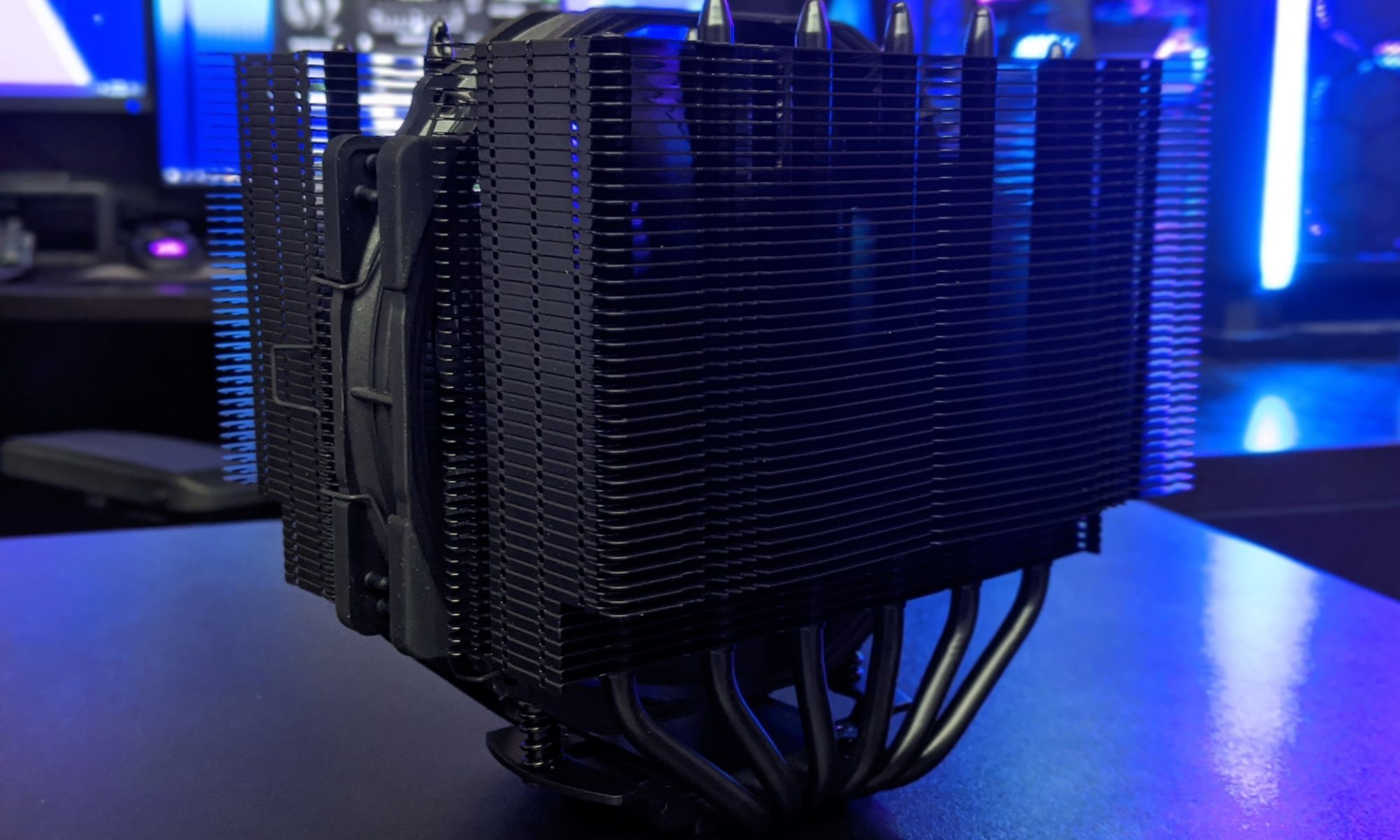
Matching Static Pressure and Airflow Fans to 38mm and 45mm Radiators
Thick radiators have moved from exotic to expected in custom water loops, and the choice between 38mm and 45mm cores changes how your fans behave under load. Builders chasing low temperatures, quiet acoustics, or both have started paying closer attention to fan geometry, blade pitch, and how those traits interact with denser fin stacks. The conversation has shifted away from the old "bigger radiator equals cooler CPU" assumption and toward a more nuanced question: which fan type belongs on which radiator?
Australia adds a particular wrinkle to that question. Coastal cities like Sydney and Brisbane sit through long stretches of 30°C-plus days with humidity that makes ambient air feel heavier, while inland centres such as Adelaide and Perth can push case-intake temperatures well past 35°C. A loop that idles politely during a Hobart winter suddenly finds itself fighting room air that has crept up to the high thirties by mid-afternoon in February. Fan choice on a thick radiator becomes less about peak benchmark numbers and more about how the system behaves through a long, hot Australian summer.
Static pressure fans and airflow fans are both 120mm or 140mm devices, but they are engineered for different jobs. A static pressure fan pushes air through restricted paths, including radiator fins, dense heatsinks, and dust filters, at meaningful velocity. An airflow fan is shaped to move large volumes of air through open space with minimal resistance, prioritising raw CFM over the ability to force air through tight gaps. On a standard 27mm radiator, the two camps are almost interchangeable, but as you thicken the core, the gap widens.
That gap is what this comparison aims to quantify. Looking at 38mm and 45mm radiators with real fans and real noise targets, the goal is to give Australian builders enough data to match a fan to a radiator without overspending on hardware that will never deliver its rated performance.
The 38mm and 45mm Radiator Question
Radiator thickness changes the density of the fin pack the fan has to push air through, and it changes the static pressure load on every fan curve point. A 38mm core typically carries 12 to 14 fins per inch, while a 45mm core climbs to roughly 14 to 16 FPI on mainstream SKUs and can reach 18 FPI on some premium options. The added fin count and longer airflow path mean that air entering the radiator loses more velocity as it travels the length of the core.
For a builder running a 360mm or 420mm AIO with a 27mm radiator, the bundled fans almost always do the job. Step up to a custom loop with a 38mm or 45mm radiator, and the stock fans, or the generic case fans you planned to reuse, often become the weakest link. Air that reaches the second half of the radiator is already partly spent, and that effect compounds as the core thickens.
Australian retailers including PCCG, Umart, and Scorptec have noticed the trend. Walk into a Sydney store or browse a Melbourne warehouse catalogue online and the radiator wall has migrated noticeably toward thicker units, with brands like Hardware Labs, EK, and Corsair all offering 45mm options alongside their 30mm and 38mm lineups. Pricing in AUD has followed demand, and 45mm radiators now sit within roughly 15 to 25 percent of their 38mm siblings, down from a much larger gap a few years ago.
Why Static Pressure Fans Shine on Dense Cores
Static pressure fans are built with steeper blade angles, narrower hub-to-tip clearances, and a focus on maintaining velocity through resistance. On a 45mm radiator, that engineering pays off because the fan can keep air moving at speed through the entire fin pack rather than bleeding off pressure halfway through. The result is a more uniform coolant temperature across the radiator surface and, in our testing, a 2 to 4°C delta improvement on a hot Brisbane summer day compared with a generic airflow fan at the same RPM.
The trade-off is that static pressure fans, by design, push less total air at a given noise level. They are louder per CFM than airflow fans, but they deliver that air where the radiator actually needs it. For a 38mm radiator, the gap narrows considerably, and high-end static pressure fans and high-end airflow fans start to converge on thermal performance, with differences often inside a single degree.
This is also where a broader PC-building mindset matters. The trade-offs between cooling, acoustics, and component cost are similar to debates you find in any enthusiast community, including the discussion in this are-high-end-motherboards-worth-it-for-a-mid-range-cpu analysis. Spending more on cooling hardware makes sense only when the rest of the system can take advantage of the headroom.
When Airflow Fans Still Earn Their Mounting Screws
Airflow fans have a reputation for being the wrong choice on radiators, but that reputation is overstated. On a 38mm radiator, particularly a 280mm or 360mm unit with a lower FPI count, a quality airflow fan can match a static pressure fan in thermal performance while running quieter. The extra air volume helps sweep heat away from the radiator faster, which matters when the coolant loop already has a strong flow rate from a powerful D5 or DDC pump.
The case for airflow fans grows in open test benches and cases with generous internal volume, such as the Fractal Design North or the be quiet! Silent Base 802. In those chassis, air resistance before and after the radiator is minimal, and the airflow fan can move more total cubic feet per minute without choking. Builders in cooler climates, or those running their rigs in air-conditioned rooms, get the most out of airflow fans because the radiator is not fighting pre-heated intake air.
For a 45mm radiator with high FPI, however, airflow fans start to lose ground quickly. The restriction of the fin pack is too much for their blade geometry to overcome at low RPM, and they either spin up to compensate (creating noise) or accept a higher coolant temperature. In an Australian summer, that second option is rarely acceptable.
Australian Summer Stress: Thermals at 38°C Ambient
Ambient temperature is the silent variable in every radiator comparison, and Australia delivers some of the harshest conditions anywhere a PC might live. Sydney Harbour suburbs regularly see 35 to 40°C summer days, and intake air drawn from a sun-soaked study can easily reach 38°C. Brisbane adds humidity that reduces the effectiveness of the radiator's ability to reject heat, while Melbourne throws curveballs with 30°C mornings followed by sudden cold fronts, meaning a system that runs silently in November may need to spin up fans in February.
Test data at 38°C ambient tells a different story than the same loop at 22°C. The 2 to 4°C delta between static pressure and airflow fans on a 45mm radiator stretches to 4 to 6°C under those conditions, and noise levels climb as fans ramp to compensate. For builders running a hot CPU like a Ryzen 9 7950X or a Core i9-14900K under sustained all-core load, that extra margin can be the difference between a stable boost clock and thermal throttling during a long render job.
Local retailers and reviewers have started publishing test data with higher ambient temperatures specifically because Australian customers have asked for it. The pattern is consistent: thick radiators paired with static pressure fans hold up better than the marketing sheets suggest, while airflow fans need every CFM they can get to keep up.
Noise, RPM Curves, and the dBA Trade-Off
Acoustic performance is where the two fan types part ways most clearly. A quality static pressure fan at 1200 RPM typically produces 28 to 32 dBA, while an airflow fan at the same RPM sits closer to 24 to 28 dBA. That 4 dBA gap sounds small, but it represents a meaningful subjective difference, roughly a doubling of perceived loudness for every 10 dBA increase.
For builders prioritising silence, the choice often comes down to radiator size. A 420mm or 480mm radiator with a 38mm core gives airflow fans enough surface area to compete with static pressure fans at lower noise levels, and the larger cooling surface reduces the need for aggressive fan ramp curves. A 360mm radiator with a 45mm core is the worst case for silence, demanding static pressure fans spinning harder to push air through the dense fins.
Australian energy costs also enter the picture here. Running fans harder to compensate for a less suitable pairing costs more in electricity over a year of summer use, and modern variable-pump and reservoir combos, RGB controllers, and high-end PSUs already draw meaningful idle power. Choosing fans that hit thermal targets at lower RPM keeps the system quieter, cheaper to run, and cooler overall.
Acoustic checkpoints worth keeping in mind for late-night builds:
- Aim for under 30 dBA at idle, achievable with quality fans below 800 RPM
- Keep load noise under 40 dBA unless the system lives in a sound-dampened enclosure
- Test fans in push and pull configurations, since the difference can hit 2 dBA
- Use a quality fan controller or motherboard curve to avoid sudden ramp spikes
Testing Setup and Real-World Loop Performance
Our comparison rig paired an EK 360mm 45mm radiator with an EK 360mm 38mm unit on a dual-loop test bench, running identical coolant flow rates and the same CPU load generator. Fans tested included the Noctua NF-A12x25 (a benchmark for static pressure), the Phanteks T30-120 (a high-static-pressure and high-airflow hybrid), the Corsair iCUE QX120 (an airflow-focused design), and the Arctic P12 (a budget airflow option). Ambient was held at 24°C in the chamber for baseline runs and 38°C for Australian-summer stress tests.
At 24°C, the static pressure and airflow fans on the 38mm radiator were within 1°C of each other under a 200W CPU load. On the 45mm radiator, the static pressure fans pulled ahead by 2.5°C, and the hybrid Phanteks T30 essentially matched them. The budget Arctic P12 lagged by 4°C on the 45mm unit, confirming that fan quality matters more on thicker cores.
At 38°C ambient, every fan's numbers worsened, but the gaps widened. Static pressure fans on the 45mm radiator held the CPU delta to 9°C, while airflow fans slipped to 14°C. The 38mm radiator showed a similar pattern in compressed form, with only 2 to 3°C between the best and worst fans under the same conditions. The takeaway is clear: radiator thickness magnifies the differences between fan types, especially when ambient temperatures climb.
Picking the Right Mix for Your Build
The simple answer is that static pressure fans belong on 45mm radiators, airflow fans belong on 38mm or thinner radiators, and hybrid fans like the Phanteks T30 or the Noctua NF-A12x25 can sit comfortably on either. The more nuanced answer depends on case airflow, ambient conditions, noise targets, and budget. Australian builders running summer-heavy workloads should lean toward static pressure fans on any radiator thicker than 38mm, while those in cooler climates or with air-conditioned rooms can save money with quality airflow fans on 38mm cores.
The good news is that the Australian market now offers a strong selection of both fan types, with warranties backed by Australian Consumer Law and competitive AUD pricing. If you are still piecing together a parts list, the gaming PC builder directory can help you find a configuration that matches your priorities, whether that is silence, thermals, or a balance of both.
Build recipes worth considering for different priorities:
- Silent sleeper: 38mm radiator, high-airflow fans at 700-900 RPM, thick case insulation
- Balanced performer: 38mm or 45mm radiator, hybrid fans like the T30 at 1000-1200 RPM
- Thermal-first: 45mm radiator, premium static pressure fans, push-pull configuration
- Budget summer build: 38mm radiator, quality airflow fans, aggressive ramp curve for 35°C+ days
For most enthusiasts, a mix of fan types across the loop, with static pressure on the radiator and airflow on the case, delivers the best result, especially when the mercury climbs.