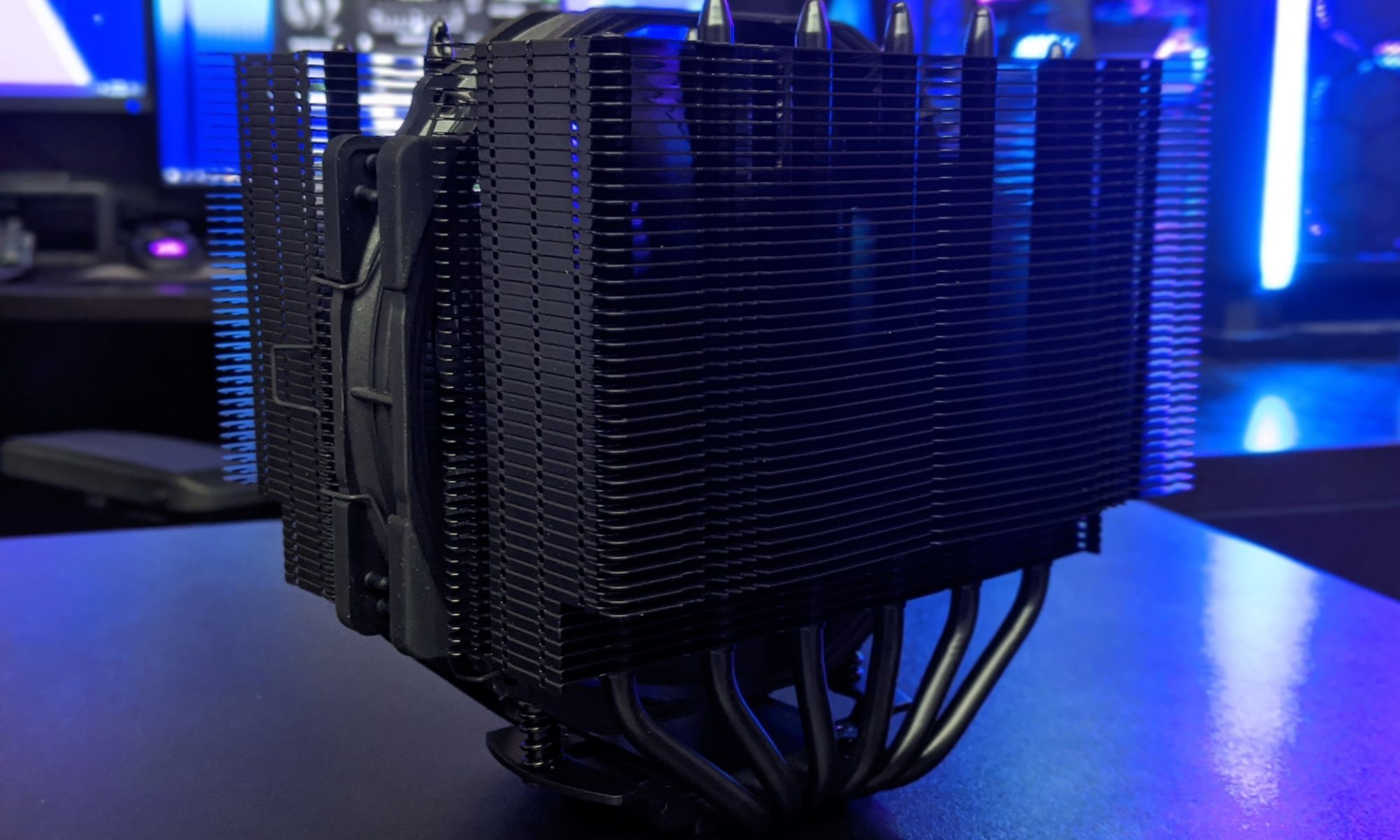
AM5 Offset Mounting Tested: What It Does For CPU Temperatures
AM5 processors can run surprisingly warm even when the cooler, thermal paste and case airflow appear perfectly adequate. Ryzen 7000 and newer chips place their hottest silicon away from the centre of the heat spreader, so the most effective part of a cooler’s cold plate may not sit directly above the main heat source. Offset mounting attempts to correct that alignment.
The idea is straightforward: move the CPU cooler a few millimetres across the socket so its heat pipes or contact plate cover the chiplets more effectively. It is a small mechanical change, yet it can alter peak temperature, fan speed and sustained boost behaviour. The benefit varies with the CPU, cooler design and workload, so a single impressive result should not be treated as a guarantee.
For Australian builders, this matters when a summer room in Brisbane or western Sydney is already sitting around 30°C, or when a compact gaming system has limited airflow. Cooler prices also vary sharply between local retailers, and a mounting kit that costs little can be more useful than replacing a perfectly good heatsink.
Why AM5 Benefits From A Different Mounting Position
The AM5 heat spreader is designed to protect the processor and distribute heat, but the heat does not originate evenly beneath it. Ryzen chips use chiplets, and the compute dies sit toward one side of the package rather than directly under the geometric centre. On many Ryzen 7000 models, the hottest region is closer to the lower portion of the socket when the motherboard is installed in its normal orientation.
A conventional cooler bracket centres the cold plate over the integrated heat spreader. That is sensible for general compatibility, but it can leave a portion of the contact area carrying less heat while the cooler’s most effective section sits slightly away from the hottest chiplets. Moving the cooler roughly 5–7mm towards the bottom edge of the motherboard can place more fin area, heat pipes or microfins above those dies.
The exact direction depends on the bracket and cooler instructions. “Offset” does not mean rotating the cooler or mounting it diagonally. It means shifting the assembly along a defined axis while maintaining even pressure. A bracket designed for AM5 should specify the direction clearly; improvising with washers or filing mounting holes can create uneven contact and damage the socket area.
How We Tested The Temperature Change
We compared a standard centred installation with an AM5 offset position using the same processor, cooler, thermal compound, fan curve and case configuration. The test platform was allowed to reach a stable room temperature before each run. The cooler was removed, the contact surfaces were cleaned, and fresh paste was applied for both configurations rather than reusing the original imprint.
A Ryzen 7 7800X3D paired with a quality dual-tower air cooler showed the clearest practical pattern. In a ten-minute all-core workload, offset mounting reduced the peak package temperature by around 2°C in our repeatable runs. A longer gaming session produced a smaller difference, generally between 0.5°C and 1.5°C, because game loads move between cores and rarely sustain the same heat density as a rendering benchmark.
The result was larger with a high-power Ryzen 9 chip and a cooler with a broad, finely channelled contact plate. Under sustained multi-core rendering, a 7950X-class processor can show a 2–4°C improvement when the offset position is well matched to the cold plate. These figures are useful ranges rather than promises. Ambient temperature, mounting pressure and motherboard power limits can easily obscure a small gain.
Temperature logging needs some care. Ryzen’s reported peak temperature can jump quickly when a single core boosts, so the highest recorded value is less informative than a repeated workload average and the time spent near the thermal limit. For a clearer comparison, we recorded package temperature, effective clock speed, fan speed and room temperature together.
Cooler Design Changes The Result
Offset mounting is most useful when the cooler’s base can take advantage of the new position. A large direct-contact heatpipe cooler may improve if its heatpipes move over the chiplets, but it can also perform worse if the offset pushes the processor towards a less effective edge of the base. The same applies to all-in-one liquid coolers: the internal microfin pattern, cold-plate shape and mounting pressure determine whether the shift helps.
Some coolers already use a broad copper plate that covers the relevant area, making the improvement very small. Others have heatpipes arranged in a way that leaves a gap over part of the AM5 package. Checking the paste imprint after a test mount can reveal whether the CPU heat spreader is contacting the most useful section of the base, although an imprint is only a guide and should not replace measured temperatures.
The mounting hardware itself can affect the outcome. Noctua, Thermalright and several other manufacturers provide AM5-compatible offset brackets or frames, while some stock mounting systems offer no adjustment. A replacement frame may change socket pressure, interfere with the motherboard’s original backplate or complicate warranty support, so the cooler manufacturer’s documentation is more reliable than a generic online diagram.
Builders shopping in Australia should also check the exact accessory included with the local model. A cooler sold through PCCaseGear, Scorptec or Umart may have a revised mounting kit while an older marketplace listing still shows the previous hardware. Australian pricing includes GST, but imported brackets can attract shipping costs that erase the value of a 2°C improvement.
What The Numbers Mean In Daily Use
A lower peak temperature does not automatically produce a faster computer. Ryzen processors manage voltage and boost clocks dynamically, and many systems will use the extra thermal headroom to hold a slightly higher frequency rather than display a dramatically lower temperature. In a fixed-frequency comparison, the difference may look like a straightforward thermal reduction; under normal automatic boosting, it may appear as steadier clocks or a quieter fan curve.
Noise was easier to notice than performance in some runs. When the offset reduced the cooler’s peak temperature by 2–3°C, the fan controller spent less time at its aggressive upper step. That can make a system sound smoother during compiling or video encoding, even if the average frame rate is unchanged. The effect is especially welcome in a small study or bedroom, where a brief fan surge is more noticeable during an arvo gaming session.
Idle readings are poor evidence for this modification. Background tasks, Windows updates and monitoring software can move idle temperature by several degrees, which is larger than the offset benefit in many cases. Gaming results are also sensitive to the graphics card, frame-rate limit and room airflow. Use an extended CPU workload when evaluating mounting changes, then check a familiar game to see whether noise or clock behaviour improves.
Repeatability matters because small thermal differences can come from ordinary test variation. The same principle applies when judging odds and repeatability: one result has limited value until the conditions and runs are consistent. We treated a change as meaningful only when it appeared across multiple mounts and remained visible after accounting for ambient temperature.
Installation Advice For Australian Builds
Start by recording the original result before changing anything. Note the room temperature, motherboard settings, fan curve, workload duration and CPU package power. Disable automatic variables only if the test requires it; for a normal buyer comparison, keeping Precision Boost and the motherboard’s usual limits active gives a more realistic picture.
When fitting an offset bracket, tighten the screws gradually in an alternating pattern. Confirm that the cooler does not touch the RAM, VRM heatsink or top PCIe slot, particularly on compact B650 boards. Check that the pump tubes or heatpipes are not forced against the side panel. A cooler that gains 2°C but prevents the case panel from closing is not a useful upgrade.
Thermal paste application should remain consistent. The AM5 heat spreader has a large surface area and exposed components around its edges, so avoid excessive paste that can squeeze into unwanted gaps. The contact pattern after removal should be broad and even. A narrow dry section may indicate incorrect bracket orientation, insufficient pressure or a cold plate that does not suit the offset position.
Australian conditions make the final validation worthwhile. Test on a warm day rather than relying only on a cool Melbourne winter room, and clean dust filters before comparing results. In Perth, Adelaide and inland areas, dry dust can build up quickly; in coastal Queensland, higher humidity and warm ambient air leave less thermal headroom. Offset mounting will not fix a blocked front filter, an undersized cooler or a case with poor exhaust airflow.
For most AM5 owners, the modification is a refinement rather than a mandatory upgrade. Expect a modest temperature reduction, with the best chance of success on high-power Ryzen 9 processors and coolers whose contact design aligns well with the shifted chiplets. If the required bracket is inexpensive and officially supported, it is worth testing. If it demands an expensive replacement frame, the same budget may deliver a larger improvement through a better cooler, quieter fans or improved case ventilation.