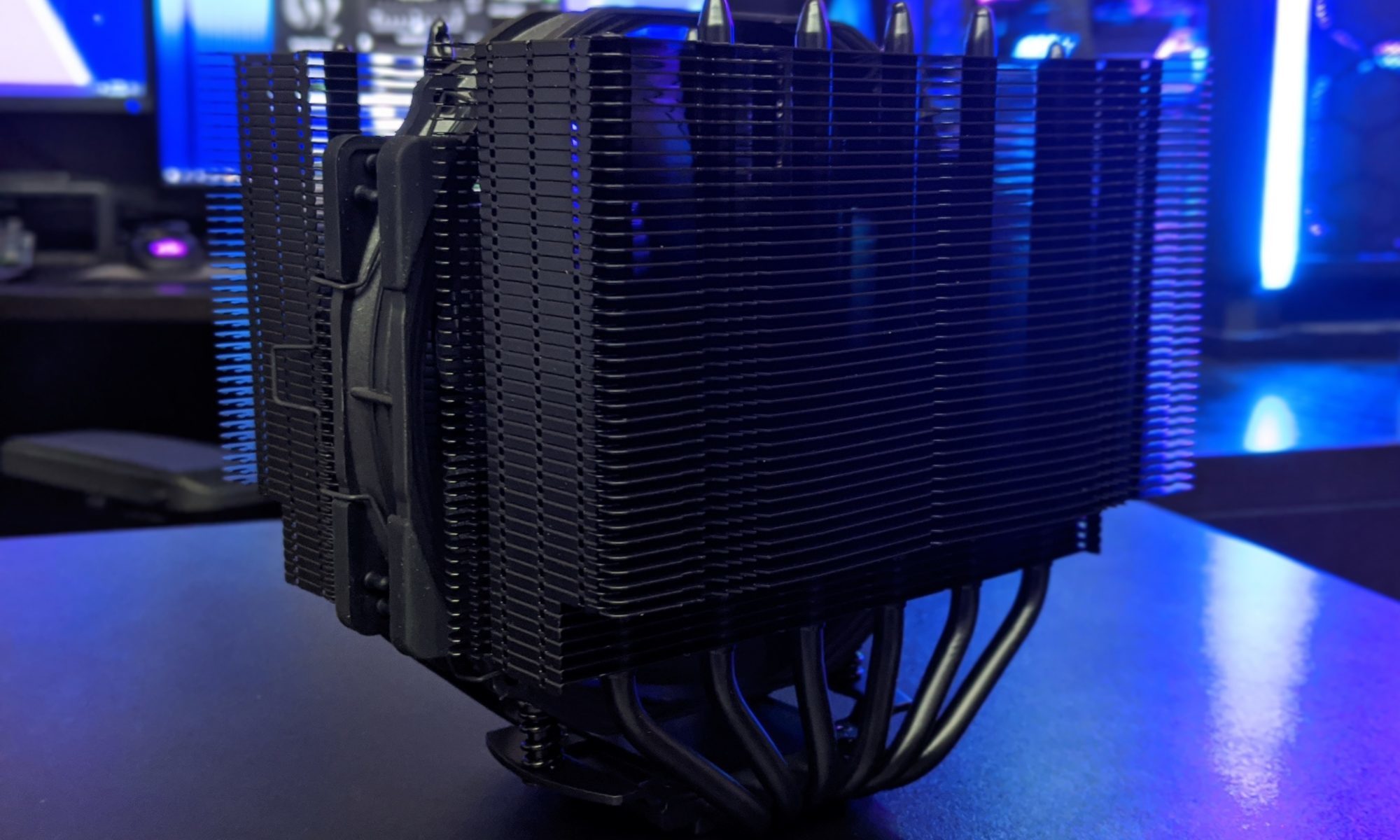
Benefits of offset CPU cooler mounts on AM5 chips
AM5 Ryzen systems give builders efficient desktop processors, but the socket’s mounting geometry has created another decision: whether a CPU cooler should use the standard or offset position. On a Ryzen 7000 or Ryzen 9000 build, that choice can influence contact over the heat spreader, clearance around tall DDR5 modules and room for the fan and heatsink. It is a small mechanical choice with consequences for thermals, acoustics and future upgrades.
AMD retained the 90 × 54 mm mounting-hole pattern used by AM4, so many AM4-era brackets and backplates remain useful on AM5 boards. However, compatible holes do not mean every bracket places the cold plate identically. An offset arrangement accommodates AM5 geometry while letting cooler makers move the tower away from memory or crowded parts. Brands label positions differently, so the word can describe a shifted bracket, alternative holes or a change in cooler orientation.
The case for the shifted position is mechanical rather than magical. It does not add heat-sink surface or change the processor. When the contact plate sits more squarely over the integrated heat spreader, spring pressure and airflow can be distributed more evenly. Moving the fin stack and fan away from tall memory can also solve obstruction problems. Some builds gain both; others gain only clearance.
Australian buyers can compare AM5 coolers through PLE Australia, Mwave and Centre Com, generally with prices in Australian dollars and local warranty support. Heat matters in Sydney, Melbourne and Brisbane, where a warm room can make a higher fan curve or audible cooling harder to avoid. Imported parts may attract GST, customs duty and courier charges, so the cheapest overseas listing is not always the cheapest delivered option.
Why offset positions exist
AM5’s socket and CPU package are not perfectly symmetrical around the mounting holes. The term offset is also used for more than one adjustment: one bracket may compensate for socket geometry, while another deliberately moves the whole assembly to clear RAM. This is why an AM5-specific bracket can look identical to an AM4 part yet place the cold plate or tower a few millimetres differently.
Those millimetres can determine whether contact is evenly supported over the heat spreader, whether the lower fan intrudes into a DIMM slot, and whether the fin stack crowds a VRM or M.2 heatsink. Fitting the screws is only the first step. The cold plate must sit flat, the backplate must support the load and spring tension must pull evenly on both sides. This is mainly a tower-cooler issue; an AIO block has no large fin stack to reposition.
Bracket availability can change as manufacturers revise hardware for new CPUs and socket updates. Readers tracking revisions, BIOS changes and cooler support can cross-check platform update coverage against AMD documentation and the cooler maker’s latest list.
Cooler temperatures, boost headroom and noise
The strongest thermal benefit appears when the standard bracket leaves part of the cold plate beyond the AM5 heat spreader or over a less thermally important section of the package. An offset bracket can then restore a more even footprint. Better contact can reduce temperature gradients and help the Ryzen chip maintain its intended boost during long all-core workloads rather than relying on thermal throttling.
That does not make offset a universal temperature upgrade. A tower already centred on the heat spreader may lose a few degrees if shifted away from the optimal contact point. Cooler capacity, power limits, case airflow, dust and ambient temperature usually have a larger effect. The advantage is choosing a position that suits both the processor and the build.
Noise gains are indirect but valuable. If the better position reduces the heat to dissipate, the BIOS fan curve can use lower minimum speeds or a gentler ramp, preserving quiet operation during gaming and desktop work. A useful comparison records package power, all-core temperature, fan speed and sound pressure in dBA under the same workload, rather than advertising a maximum from a synthetic stress test.
DDR5 memory clearance in real builds
High-profile DDR5 memory is one of the clearest reasons to consider the shifted position. Many enthusiast kits stand taller than the low-profile modules assumed in cooler design drawings, and a wide tower can overhang the nearest DIMM slots. Moving the tower towards the rear I/O area, or in another manufacturer-defined direction, can preserve access to the latches and avoid forcing a fan above the memory.
The trade-off is that the fin stack then occupies space near the motherboard’s VRM heatsink, a rear case fan or an M.2 heat spreader. Offset is therefore not simply better clearance; it is a different clearance trade. Builders should compare the bracket drawing with the board layout and check whether the cooler blocks a heatsink fin, interferes with a case fan or forces a taller chassis.
Storage layout deserves the same inspection, particularly in compact AM5 cases. For a crowded board, the external storage comparison weighs 2.5-inch SATA and M.2 NVMe options for capacity, speed and value. An external drive can free an M.2 position and simplify routing around a large air cooler.
Benefits of an offset mount at a glance
The benefits of the shifted position can be grouped by what they solve rather than by socket generation. The thermal and acoustic case is clearest when the alternative leaves the contact plate poorly centred or the processor is expected to sustain high package power.
- More even cold-plate contact can improve heat transfer across the AM5 integrated heat spreader.
- Better alignment may reduce peak temperatures during sustained Ryzen 7000 or 9000 all-core loads.
- Lower thermal demand can permit a slower fan curve and quieter operation in a well-ventilated case.
- More cooling headroom can help preserve boost behaviour instead of relying on thermal throttling.
The clearance case is equally practical, especially when the standard position would interfere with tall memory or nearby motherboard hardware.
- A shifted tower can clear high-profile DDR5 modules and leave their latches accessible.
- The fan and fin stack can avoid crowding an M.2 cover, VRM heatsink or case fan.
- AM4-compatible hardware may be reusable on AM5 with the correct bracket or backplate.
- Better cooler-to-case alignment can simplify a compact or airflow-focused build.
These are mechanical gains, not hidden overclocking features. The outcome depends on bracket geometry, CPU generation, cooler capacity and the rest of the system. A small form-factor build with tall memory may value clearance above a fraction of a degree, while a thermally limited workstation can benefit more from accurate contact placement.
Using the right bracket without compromising contact
Check the exact socket and bracket rather than relying on the AM4 label. AMD’s 90 × 54 mm pattern makes cross-generation reuse possible, but bracket shape, backplate thickness, standoffs and cold-plate travel still matter. Some coolers ship with a dedicated AM5 bracket in a standard or offset position, while others require an optional kit. Mixing an old backplate with new standoffs can create uneven pressure, poor contact or motherboard stress.
Install the backplate and standoffs with the board outside the case if practical, then tighten spring-loaded screws in a cross pattern. Check that the contact plate sits flat and neither fan presses against a DIMM or case bracket. On air coolers, confirm the front fan can sit high enough without losing its clip or touching memory; offset can help, but it does not replace a sensible fan height.
Validate the result after the first stress test. Compare idle behaviour, package power, maximum temperature and fan noise with the BIOS fan curve under a realistic workload. If temperatures rise sharply after changing the mount, revisit contact, bracket orientation and cooler seating before increasing fan speed. Repeatable Hardware Hounds testing is especially useful when a bracket is new or the case has restrictive airflow.
Choosing an offset mount in the Australian market
For Australian buyers, the best value is the complete platform rather than the cheapest bare cooler. Compare the Ryzen processor, AM5 motherboard, board VRM, memory and cooler as a matched set, since a stronger CPU can change the cooling requirement completely. Local listings from PLE Australia, Mwave and Centre Com are convenient because prices are shown in AUD and warranty claims are easier to handle locally, although sale events can shift stock and pricing quickly.
Direct imports can still be worthwhile for a niche bracket, but border processing may add GST, customs duty or handling charges, and a delayed part can leave a build idle. Calculate the landed cost, confirm the part is the correct AM5 revision and retain a local fallback. Summer conditions in Brisbane, Sydney or Melbourne also matter: a cooler needing constant maximum fan speed may be adequate but disappointing to live with.
Editorial context matters when technical advice is mixed with referral incentives. This site’s casino affiliate guide makes its commercial purpose obvious, just as a credible hardware comparison should make retailer relationships and test conditions clear. For AM5 cooling, decisive evidence is repeatable thermals, noise and total system value. Offset mounting earns its place when measured results or physical clearance show a clear benefit over the standard position.