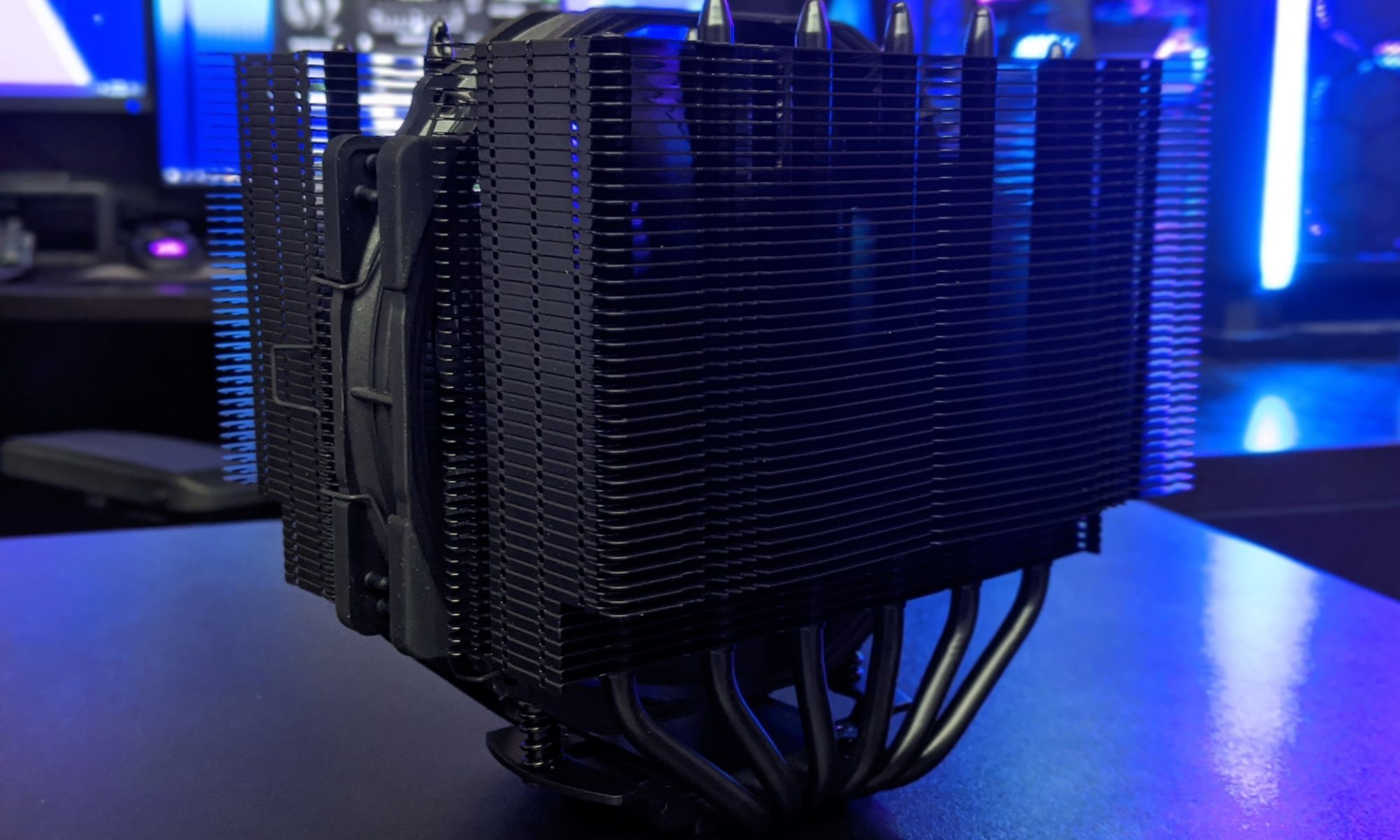
Affordable CPU coolers under $50 that leave stock coolers in the dust
Stock coolers that come bundled with retail processors get the job done in a pinch, but they were never designed to keep a chip comfortable under serious load. For Australian builders dealing with 35-degree January arvos and stuffy home offices without proper ducted cooling, those little aluminium lumps often spin up to jet-engine levels before the CPU even breaks a sweat. A budget aftermarket tower cooler solves both problems without hammering your wallet.
This guide rounds up the strongest sub-$50 air coolers you can grab right now from local retailers like Scorptec, Mwave, and Centre Com, plus what to look for when spec sheets start looking like alphabet soup. Whether you're assembling a new rig, swapping out a whiney stock fan, or trying to tame a Ryzen 5 7600 that throttles the moment you launch a game, there's something here for every kind of build.
Why bundled coolers rarely cut it for Aussie builders
Intel's stock Laminar cooler and AMD's Wraith Stealth both look the part in a tidy ATX case, but they exist primarily to validate the warranty sticker. They're slim, light, and built around a single aluminium extrusion with a tiny fan that ramps up the moment temperatures creep past sixty degrees. In a mild Hobart winter that's fine. In a Brisbane summer, with the CPU boosting to 5.2 GHz in a compact chassis, the cooler basically surrenders.
There's also the noise angle. Stock fans are tuned to stay quiet at idle, but they hit an aggressive curve under load because the heatsink simply cannot dissipate heat quickly enough. The result is a high-pitched whine that gets old fast during a long session of Helldivers 2 or a video export that takes an hour. Replacing the stock unit with a tower cooler that has a larger surface area and a slower-spinning 120 or 140 mm fan cuts decibel levels dramatically while keeping temperatures in check.
Local builders also need to think about case airflow more than folks in colder climates. Many Australian prebuilts from the big retailers ship with only one exhaust fan and zero intake, which means hot air just recirculates inside the case. A better cooler helps, but pairing it with sensible airflow matters just as much.
Reading the specs that actually matter
Cooler marketing loves throwing around TDP numbers, but a 220-watt rating on the box rarely translates to real-world performance. What matters more is the heatsink mass, the number of heatpipes, and the fan's static pressure rating. Six heatpipes running through direct-contact copper bases will outperform a four-pipe design with similar fans, and a tower that's 155 mm tall will generally beat one squeezed into 120 mm.
Clearance is the other detail that decides whether a cooler actually fits. Measure from your CPU socket to the side panel, and check how tall your RAM sticks are. Many budget coolers now ship with cut-outs or offset designs to dodge tall DDR5 modules, which is handy because plenty of Australian builders have moved to 32 GB kits for gaming. If you're running a mATX or mini-ITX board, low-profile coolers under 70 mm tall become essential rather than optional.
Finally, look at the fan connector and supported PWM range. A cooler that only spins at 100 percent or off will drive you spare. PWM control between roughly 500 and 1800 RPM gives the motherboard room to ramp the fan up gradually based on load, which keeps things quiet during web browsing and cool during Cinebench.
Tower air coolers worth every cent
For a standard mid-tower ATX build, the workhorses under $50 AUD are still the Cooler Master Hyper 212 series, the DeepCool AK400, and the Thermalright Peerless Assassin 120. The Hyper 212 Evo V2 in particular has been a staple at Aussie retailers for around $45, often less during Centre Com sales. It handles chips up to a Ryzen 7 7700X without flinching and runs a near-silent 120 mm PWM fan at typical gaming loads.
The DeepCool AK400 brings a slightly more modern aesthetic with a minimalist black top plate and a single tower design that clears most tall RAM. It's a touch cheaper than the 212 and ships with a pre-applied thermal paste pad, which is handy for first-timers. Performance is comparable to the Hyper 212, though the AK400's fan has a slightly higher minimum RPM, so it never goes truly silent at idle.
For builders chasing the absolute best thermals per dollar, the Thermalright Peerless Assassin 120 SE often shows up on Mwave for under $50 during sales. With six heatpipes and dual 120 mm fans, it trades blows with coolers costing twice as much. The catch is its 157 mm height, which won't fit in compact mid-towers, so measure twice before clicking buy.
Compact options for small builds and HTPCs
Small form factor is where the budget cooler market gets really interesting, because you're paying for engineering rather than raw mass. The Noctua NH-L9a-AM4 sits in the premium bracket of low-profile coolers at around $55 AUD, but the ID-Cooling IS-30 and Silverstone AR06 often dip below the $50 line at JW Computers and Scorptec. These 47 mm-tall coolers fit inside mini-ITX cases like the Cooler Master NR200 and the Lian Li A4-H2O without blocking RAM slots or PCIe cards.
The trade-off is thermal headroom. A low-profile cooler with a 92 mm fan simply cannot dissipate as much heat as a full tower. For a Ryzen 5 5600X or an i5-13400F in a home theatre PC, that's perfectly fine. For an i7-14700K that likes to suck 200 watts under all-core load, you will see thermal throttling in extended benchmarks. Pair a low-profile cooler with sensible power limits in the BIOS and you're golden.
Australia has a quietly thriving SFF community, with Melbourne-based meetups and a busy subreddit where builders swap case recommendations. If you're going down this rabbit hole, follow local builds on socials before committing to a case, because clearance issues vary wildly between different mini-ITX enclosures.
Fitting a new cooler without drama
Swapping a cooler is one of the easier PC jobs, but it pays to take your time. Lay the case on its side, unplug the CPU cooler fan header, and unclip the old mounting brackets. A small Phillips screwdriver and some isopropyl alcohol for cleaning off the old thermal paste are the only tools you really need. Most aftermarket coolers ship with mounting hardware for both AM4/AM5 and LGA 1700, so check the box before assuming you'll need to buy a separate bracket.
Thermal paste application is where new builders often overthink things. A pea-sized blob in the centre of the CPU is plenty for most modern coolers. Spread it manually and you risk air pockets. Skip the liquid metal unless you're comfortable with the electrical conductivity warnings, especially around exposed capacitors on the motherboard.
Once the new cooler is mounted, boot into the BIOS and run a stress test like Cinebench R23 for fifteen minutes to make sure temperatures settle below 85°C on the hottest core. Australian rooms run warm during a February evening, so if your cooler is hitting its ceiling in a 28°C room, you'll definitely see worse in summer.
Tuning fans so your whole rig stays calm
Dropping in a new tower cooler is only half the battle. The default fan curve on most motherboards ramps the CPU fan up too aggressively at low temperatures, which is what makes a brand new build sound louder than it should. Diving into the BIOS or using a Windows tool like FanControl lets you shape the response so the cooler stays whisper quiet until the CPU actually needs help.
While you're tweaking fan curves, it's worth remembering that other components throw heat too. NVMe SSDs throttle hard once they hit around 70°C, and a graphics card sitting next to a whirly tower cooler can stay cool all game long. A handy walkthrough on custom fan curve tuning covers how to map chassis fans, pump headers, and SSD heatsink airflow into a single calm curve that keeps the whole machine happy.
A few minutes in the BIOS, a couple of reboots, and you're set. The whole point of buying a smarter cooler was to ditch the noise, so it pays to actually finish the job by giving the fan a curve worth running.