High-Bandwidth Memory Choices for AI Inference on Consumer Hardware
Running a large language model on your own desktop used to be a hobbyist fantasy. With open-weight models such as Llama 3, Qwen 2.5, and Mistral freely available, plenty of Australians are firing up llama.cpp or LM Studio after work and wondering why their shiny graphics card struggles past twelve tokens per second. The answer hides not in raw FLOPs but in the memory subsystem feeding the silicon. When a model weighs many gigabytes, the GPU's VRAM and surrounding system memory quietly determine whether an inference session feels snappy or sluggish.
This is where high-bandwidth memory stops being a spec-sheet curiosity and becomes the practical bottleneck. Bandwidth, measured in gigabytes per second, dictates how fast a transformer can read each weight from memory for every token it produces. The wider and faster the memory interface, the more context the model can juggle, and the higher the throughput you'll see. For anyone in a Sydney home office or a Brisbane share house experimenting with local AI, the choice of memory architecture has become as important as the GPU silicon itself.
True High-Bandwidth Memory, the stacked HBM2e, HBM3, and HBM3e inside data-centre accelerators, is essentially invisible on the consumer market. What buyers find on Melbourne shelves or shipped from Australian online stores is a mix of GDDR6X, GDDR7, and unified-memory APUs that approach the problem from different angles. The rest of this article walks through what each option delivers, where it falls short, and how to match memory to the inference you plan to run.
Why Memory Bandwidth Matters for Local AI Inference
Transformer inference is dominated by memory access rather than arithmetic. Once a model loads into VRAM, every generated token requires a full sweep of the weight matrices. The arithmetic intensity is low, the data movement is enormous, and the practical result is a hard ceiling tied directly to GPU bandwidth. A card with 1,000 GB/s will, all else equal, deliver roughly twice the tokens per second of one running at 500 GB/s.
Bandwidth comes from two multiplied numbers: the memory bus width in bits and the effective data rate per pin in MT/s. A 384-bit bus running GDDR7 at 28 GT/s delivers close to 1,344 GB/s. The same bus running GDDR6 at 20 GT/s delivers roughly 960 GB/s. Crank the bus to 512 bits, as several flagship cards do, and the ceiling rises again. Every step up the ladder translates into faster response, longer context windows, and the ability to load larger quantised models without spilling into system RAM and paying the PCIe throughput tax.
The HBM Gap on the Desktop
HBM3e modules accelerate H100s, MI300Xs, and B200s to bandwidth figures between 4,800 and 8,000 GB/s. Nothing sold through retail channels in Australia comes close. The reasons are structural rather than conspiratorial. HBM relies on stacked DRAM dies bonded to a silicon interposer alongside the compute die, a packaging process that adds cost and complexity. The thermals are unforgiving: each stack consumes meaningful power, complicating the cooling envelope of a slot-cooled card built for a standard ATX chassis.
Workstation cards such as the older Radeon Pro and certain RTX A-series parts did use HBM2 in limited quantities. They have effectively vanished from new sales at Australian suppliers. For anyone buying fresh in 2025, the practical high-bandwidth floor on the desktop sits with GDDR-class memory and the more recent unified-memory APUs.
GDDR7 and GDDR6X: The Practical High-Bandwidth Choices
The GeForce RTX 5090 launched with 32 GB of GDDR7 on a 512-bit bus, delivering roughly 1,792 GB/s of bandwidth and, for the first time on a consumer card, the headroom to load large quantised models entirely in VRAM. Its predecessor, the RTX 4090, uses GDDR6X across a 384-bit interface and tops out near 1,008 GB/s. The generational gap shows in real benchmarks: the newer card sustains over twice the tokens per second on common 70-billion-parameter models at similar quantisation.
On the AMD side, the Radeon RX 7900 XTX pairs 24 GB of GDDR6 with a 384-bit bus for around 960 GB/s, matching the 4090 almost exactly in bandwidth while trailing in software support for AI inference. Newer RDNA 4 cards are expected to push into GDDR7, but at the time of writing they have not landed at Mwave, PC Case Gear, or Scorptec in any meaningful quantity.
Memory configuration checklist for AI inference rigs
- Match VRAM capacity to your largest intended model, with at least 20 percent of headroom for the KV cache during long-context inference.
- Prioritise memory bus width over raw clock speed when comparing two cards at a similar price point.
- Confirm the inference engine, such as llama.cpp or vLLM, has tuned kernels for the GPU architecture.
- Verify the card physically fits your chassis; high-end GPUs are increasingly long and thick.
Unified Memory: The Quiet Revolution in Consumer AI
While the discrete-GPU world chases bandwidth through wider buses, a quieter revolution is happening on integrated parts. Apple's M-series chips pool system memory and GPU memory into a single address space, with the M3 Ultra reportedly offering close to 800 GB/s of unified bandwidth and configurations up to 192 GB. The trade-off is fixed-function hardware: inference is GPU-bound but cannot be expanded after purchase.
AMD's competing move arrived in 2025 with Ryzen AI Max, also known as Strix Halo. The flagship 395-class part ships with up to 128 GB of shared LPDDR5X memory and offers bandwidth figures in the same neighbourhood as a mid-tier discrete GPU. For a small studio in Adelaide or a Perth researcher who needs to load a 70-billion-parameter model without juggling expansion slots, a single unified-memory APU represents the most compelling consumer high-bandwidth option on the market today. Software maturity is still catching up, but the numbers are remarkable for the form factor.
System DDR5 and Channel Configuration
Even with a discrete GPU doing the heavy lifting, system DDR5 still matters. Models that overflow VRAM spill into system RAM and shuttle across PCIe 5.0, which is dramatically slower than GDDR-class memory. To minimise the pain, populate every available slot and run a dual- or quad-channel configuration. A pair of 32 GB DDR5-6000 modules is the practical sweet spot for most 2025 consumer platforms, balancing bandwidth, latency, and pricing at Umart and other local retailers.
Capacity matters more than tight timings. Buying a slightly faster kit such as DDR5-7200 is rarely worth the premium unless the workload also includes high-frequency CPU-bound tasks. 64 GB is the new comfortable baseline for an enthusiast inference rig, with 96 GB or 128 GB worth considering if the GPU can address system memory or the user plans to host multiple models simultaneously.
The Australian Market: What You Can Actually Buy
The local retail picture colours the choice more than the silicon roadmap. Australian distributors receive smaller allocations than their North American counterparts, and flagship cards frequently arrive in dribs and drabs at inner-Sydney stores and the Melbourne showrooms of major retailers. Pricing reflects the import path and the goods and services tax, and historically runs 15 to 25 percent above equivalent US dollar RRP before currency swings. Power costs add another wrinkle: a hungry inference rig drawing 600 watts from the wall will hit the hip pocket noticeably harder in South Australia or Queensland, where retail electricity rates sit at the higher end of the national range.
Buyers are protected by the Australian Consumer Law, which sits behind every transaction regardless of where the retailer ships from. A card sold as new must work for a reasonable period, and the manufacturer warranty runs concurrently with the consumer guarantees. If the high-end GPU on your wish list is out of stock locally, ordering from an offshore vendor may void the local warranty path. For background on hardware choices beyond the GPU itself, the Hardware Hounds home page curates current Australian pricing across the major categories.
Picking Memory for Your Build
The right answer depends on workload shape. Someone using a small 7-billion-parameter model for code completion needs a comfortable 16 GB of VRAM and decent bandwidth, which a mid-range RDNA 3 or RTX 4070-class card handles easily. Someone hosting a 70-billion-parameter model for general chat wants the highest bandwidth available, and the RTX 5090 plus 64 GB of system DDR5 is a sensible pairing. Someone running vision models benefits from the massive unified memory of a Ryzen AI Max APU, accepting the loss in raw tokens per second for the convenience of one machine and one power bill.
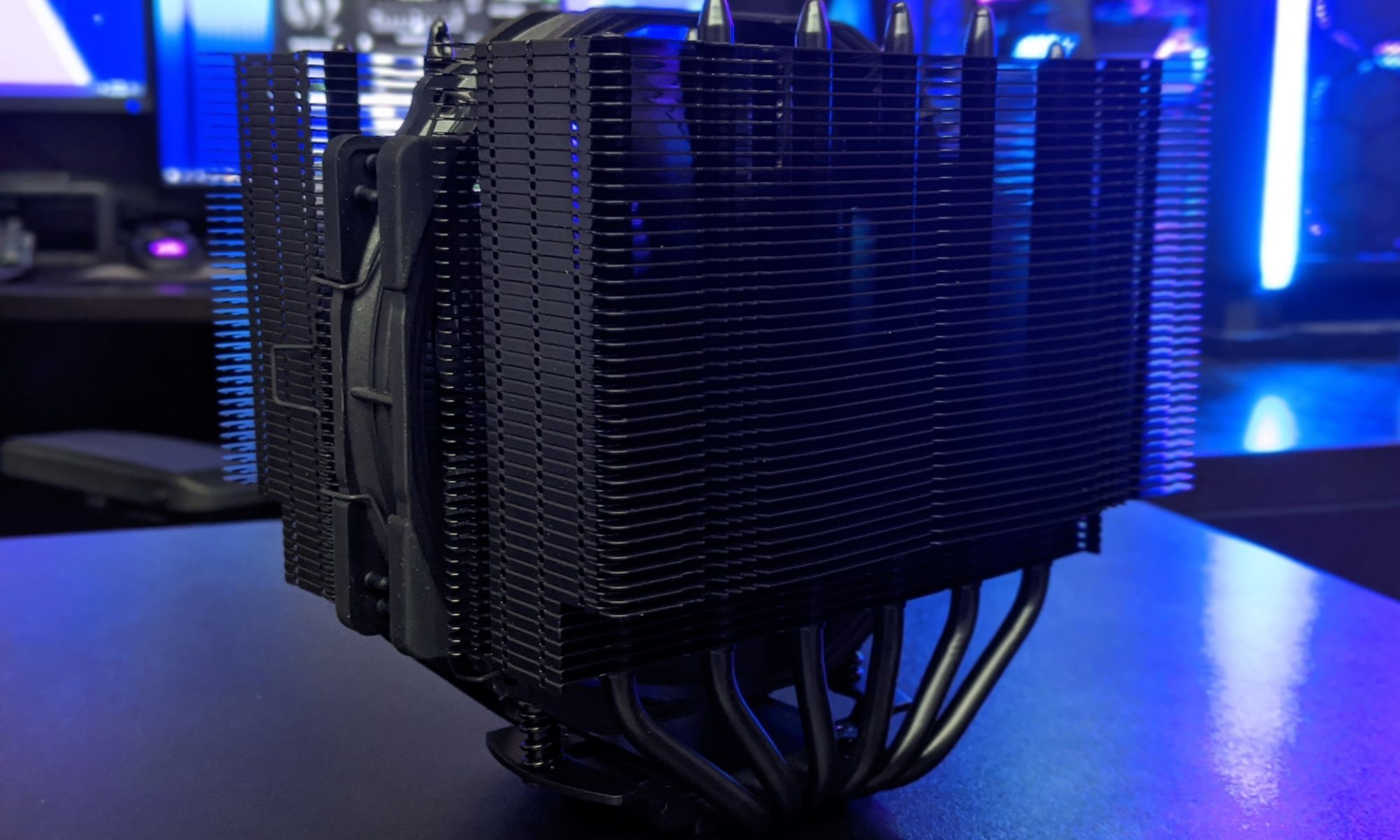
Cooling becomes part of the picture once a sustained inference workload parks the GPU at high utilisation for hours. A compact inference box squeezed into a small-form-factor case needs a proven 120 mm tower cooler to keep VRAM temperatures in check, and a dedicated compact tower cooler guide walks through the strongest contenders for HTPC and Mini-ITX enclosures. Pair the memory choice with the right chassis airflow, and the rig can crunch prompts around the clock without thermal drama.
High-bandwidth AI accelerators worth comparing
- NVIDIA GeForce RTX 5090 — 32 GB GDDR7, 1,792 GB/s bandwidth, best raw consumer throughput in 2025.
- Apple M3 Ultra — up to 192 GB unified memory, around 800 GB/s, excellent for fixed-config studios.
- AMD Ryzen AI Max 395 — up to 128 GB unified LPDDR5X, suitable for vision and long-context workloads.
- NVIDIA GeForce RTX 4090 — 24 GB GDDR6X, 1,008 GB/s, mature software stack and falling second-hand pricing.