Virtualization performance: how many cores does a homelab need
A homelab can begin with a retired office PC and quickly grow into a compact private cloud. A few virtual machines may handle Home Assistant, file storage, media serving and network monitoring, while containers run quietly in the background. The hardware question arrives when several services need to work at once: how many CPU cores are genuinely useful, and when are extra cores simply sitting idle?
Virtualization performance depends on more than the processor’s core count. Memory capacity, storage latency, CPU scheduling, cooling, power limits and the workload inside each guest operating system all influence responsiveness. A six-core desktop chip with fast NVMe storage can feel considerably better than an older twelve-core workstation platform constrained by slow disks or inadequate RAM.
For Australian builders, the calculation also includes electricity prices, room temperatures and hardware availability. A homelab in a Brisbane garage faces a different thermal environment from one in a Melbourne study, while a system operating continuously can make a noticeable contribution to the household power bill. The right design balances burst performance with sustained efficiency rather than chasing the largest specification sheet.
Start with workloads rather than virtual machine counts
A virtual machine is not automatically equivalent to a physical workload. A lightweight Debian guest running Pi-hole or a small web server may use a fraction of one core most of the time. A Windows desktop VM, software build environment, database, game server or security camera recorder can create much heavier and more variable demand.
For a basic homelab, four modern cores are enough for several low-activity services when the host has sensible memory and storage. Six to eight cores is a more comfortable starting point for mixed use: a router or firewall VM, NAS services, Home Assistant, a Linux development guest and occasional Windows testing. This range gives the hypervisor room to schedule short bursts without making every guest compete for the same execution resources.
The important measurement is concurrent load. Three idle virtual machines consume little processing capacity, while one active build job can saturate several threads for minutes. A server hosting Jellyfin transcoding, Nextcloud indexing and a Windows VM at the same time needs more headroom than a server running the same applications with no active users.
Virtual CPU allocation should therefore remain conservative. Giving every guest eight virtual CPUs because the host has eight logical threads can create scheduling contention. Start with one or two vCPUs for small services, two to four for general-purpose guests, and increase the allocation only after monitoring actual CPU ready time, load averages and application latency.
Core count, clock speed and architecture
Modern desktop CPUs complicate the old idea that more cores always produce a faster virtualisation host. A high-performance six-core processor can outperform an older twelve-core chip in lightly threaded guests because each core completes work faster. Strong single-thread performance matters for interactive Windows VMs, game servers, network appliances and applications that cannot scale across many threads.
Additional cores become valuable when workloads run in parallel. Multiple developers compiling code, several guests performing backups, software-defined storage checksums and video transcoding can all benefit from a larger pool of physical cores. Eight performance cores is a strong enthusiast target, while twelve to sixteen total cores makes sense for a busier lab with several active users or frequent testing.
Hybrid CPUs require more thought. Performance and efficiency cores can provide excellent throughput, but hypervisor support and thread scheduling affect how consistently guests behave. Recent Linux kernels and mainstream virtualisation platforms handle hybrid designs better than early implementations, yet latency-sensitive services may still benefit from CPU pinning or from reserving faster cores for selected guests.
Virtual CPU topology should also be presented sensibly. A guest does not usually need a complicated virtual socket layout, and excessive vCPUs can increase scheduling overhead. Expose a small number of cores first, then scale based on evidence. In many homelabs, six well-utilised physical cores deliver a smoother experience than a lightly loaded host with an inflated virtual CPU count.
Memory and storage often set the real limit
RAM is frequently the first component that makes a homelab feel cramped. The host operating system, hypervisor, filesystem cache and each guest all need working memory. A practical minimum for a small lab is 32GB, while 64GB provides much more flexibility for a NAS VM, Windows guest, Kubernetes nodes and several Linux services. Builders running databases, lab clusters or large development environments may find 128GB worthwhile.
Memory overcommit can increase VM density, but it is not free. Swapping guest memory to storage introduces severe latency, and compressed memory uses additional CPU time. ZFS and similar filesystems also appreciate spare RAM for caching, although the exact requirement depends on the pool layout and workload. It is usually better to buy a platform with upgradeable DIMM capacity than to maximise CPU cores while leaving no room for memory expansion.
Storage affects perceived performance just as strongly. An NVMe boot and VM pool can make snapshots, package updates and application launches feel immediate, but sustained write workloads still depend on controller quality, NAND type and thermal behaviour. Consumer drives may throttle inside a poorly ventilated case, particularly during backups or virtual machine image creation.
A separate SSD for active guests and hard drives for bulk media is a sensible arrangement. Keep frequent snapshots and databases away from a single crowded disk, and use an external or separate backup target. A UPS can protect against brief outages and unsafe shutdowns, although it should support graceful host shutdown rather than being treated as a substitute for backups.
Cooling, acoustics and power change the calculation
A homelab may run around the clock, so cooler operation and lower idle consumption matter more than a short benchmark result. Australian summer conditions can expose weak cooling quickly, especially in Brisbane or Perth rooms without air conditioning. A processor that reaches its thermal limit during long compilation or transcoding sessions may deliver less consistent performance than a lower-powered model with better sustained clocks.
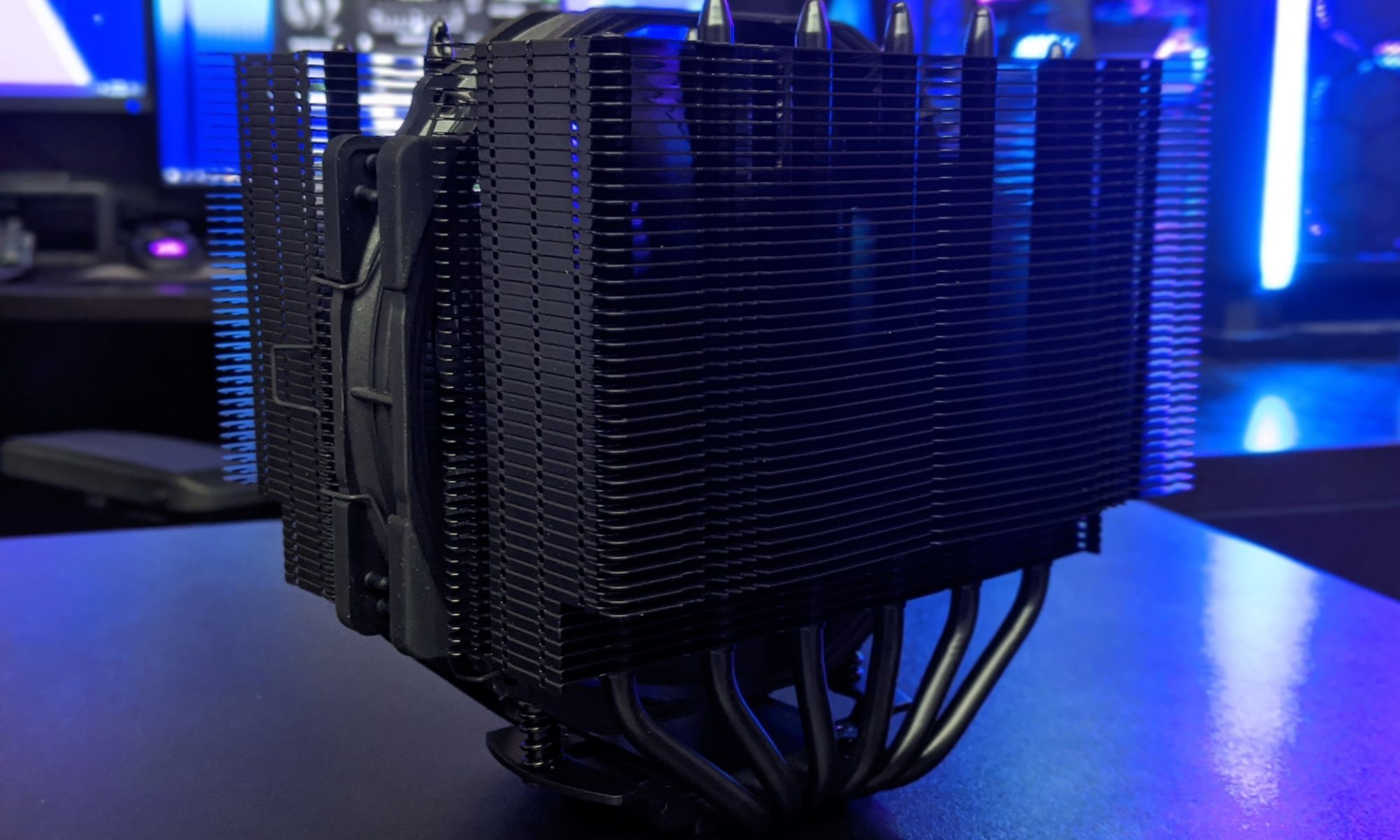
Case design is part of the platform. Large towers offer room for multiple drives, quieter fans and full-size CPU coolers, while compact cases can suit a study but leave less thermal margin. A useful case airflow comparison helps illustrate why fan placement, dust filtration and internal volume influence component temperatures and noise.
Power consumption deserves a simple annual calculation. A host averaging 80 watts continuously uses about 701 kilowatt-hours per year before the monitor, network equipment and storage devices are counted. At a household tariff of 30 cents per kilowatt-hour, that is roughly $210 annually; actual rates vary by state, retailer and time-of-use plan. A twelve-core system that idles efficiently may cost less to operate than an older eight-core workstation with a power-hungry platform.
A dedicated server can also be less convenient than expected in a suburban home. It may require a 10-amp outlet, produce fan noise at night and add heat to a room already working hard during an Australian summer. Efficient desktop hardware, sensible power limits and scheduled sleep or shutdown periods can provide a better balance for a lab used mainly after work.
Match the platform to the lab’s future
The best core count leaves room for growth without paying for unused capacity. Four cores suit a learning environment with a handful of lightweight services. Six to eight cores is the sweet spot for many enthusiasts because it supports simultaneous network services, development guests and occasional media or desktop workloads. Twelve or more cores is justified when the lab runs multiple busy VMs, CI jobs, game servers, analytics tasks or a serious container cluster.
Platform features can be more important than two extra cores. Check support for hardware-assisted virtualisation, IOMMU, ECC memory where available, multiple network interfaces and enough PCI Express connectivity for storage or passthrough devices. A processor with integrated graphics can simplify troubleshooting and avoid dedicating a discrete GPU to basic console access.
The local buying environment also shapes value. Australian retailers commonly list processors and memory in Australian dollars including GST, but stock can change quickly and workstation platforms often carry a premium compared with mainstream AM5 or Intel desktop parts. Used enterprise systems may offer abundant memory and remote management at attractive prices, although their older CPUs, proprietary power supplies and louder fans can erase savings over several years.
Security and data handling deserve attention when a homelab stores personal records, cameras or remote-access credentials. Keep management interfaces off the public internet, use strong multi-factor authentication and apply updates to the hypervisor and guests. Australia’s Privacy Act and the Australian Privacy Principles may become relevant for a small business handling customer information, even when the server sits in a home office. A lab used for experimentation should be separated from sensitive household or business data wherever possible.
Monitor before upgrading. Track host CPU utilisation, per-guest load, memory pressure, storage latency, temperatures and power draw over ordinary weeks rather than relying on a synthetic benchmark. If CPU usage stays below 40 percent while memory is full, add RAM first. If guests are responsive but storage latency spikes during backups, improve the disk layout. If cores remain saturated during genuine concurrent work, then a higher-core processor is a meaningful upgrade rather than a specification-driven purchase.
A capable homelab is therefore built around workload density, memory headroom and sustained efficiency. For most Australian enthusiasts, six to eight modern cores with 32GB or 64GB of RAM is a strong foundation, while larger systems should be chosen for measured demand. The processor should disappear into the background: services stay responsive, fans remain tolerable, and the electricity bill does not become the most visible feature of the server.