Why Identical CPUs Can Run Hotter Under the Same Cooler
Two computers can use the same processor model, cooler, case, memory and fan curve yet report noticeably different temperatures. One chip may hold a high boost clock at a reasonable voltage, while another reaches its thermal limit sooner and sounds louder under the same workload. This is not automatically a faulty cooler or a bad installation.
The difference is often called the silicon lottery. It describes natural variation between individual CPU dies, even when they share the same retail name and specifications. Manufacturing tolerances, voltage requirements, leakage, motherboard behaviour and the quality of the thermal interface all influence how much heat a processor produces and how effectively that heat leaves the chip.
What The Silicon Lottery Actually Means
A CPU is made from microscopic transistor structures that cannot be perfectly identical across every wafer. Each finished die is tested and assigned to a product tier according to performance, power consumption and stability. Two processors that pass the same specification can still require different voltages to reach a given frequency.
A stronger sample might run at 5.0 GHz with 1.20 volts, while another needs 1.25 volts for the same target. Because dynamic power rises roughly with the square of voltage, that small difference can create a meaningful increase in heat. Leakage current also varies, especially as temperature rises, so a warmer chip can sometimes consume even more power.
Retail CPUs have already been binned to fit a product range, but binning does not make every sample identical. It is closer to a selection process than a guarantee of matching electrical characteristics. Understanding that probability is useful; a short probability guide illustrates the same basic idea that outcomes within a tested group can still vary.
Why Identical Models Draw Different Power
Modern processors adjust their voltage and frequency many times per second. AMD Precision Boost and Intel Turbo Boost use information such as temperature, current, socket power and electrical reliability to select a safe operating point. A chip with a more efficient voltage-frequency curve can achieve the same clock speed using less power than a less efficient sample.
Power limits further complicate comparisons. A processor configured for a generous package power limit may sustain higher clocks and consume far more energy than the same model on conservative motherboard defaults. Some boards apply automatic enhancement settings that remove or raise the manufacturer’s limits, even when the BIOS describes them as “optimized” or “performance” settings.
This is why model names and base TDP figures are poor predictors of load temperature. TDP is generally a design reference rather than a direct measurement of maximum package consumption. Short boost bursts, all-core rendering and heavy AVX workloads can produce very different thermal results.
The Cooler Is Only Part Of The Thermal Picture
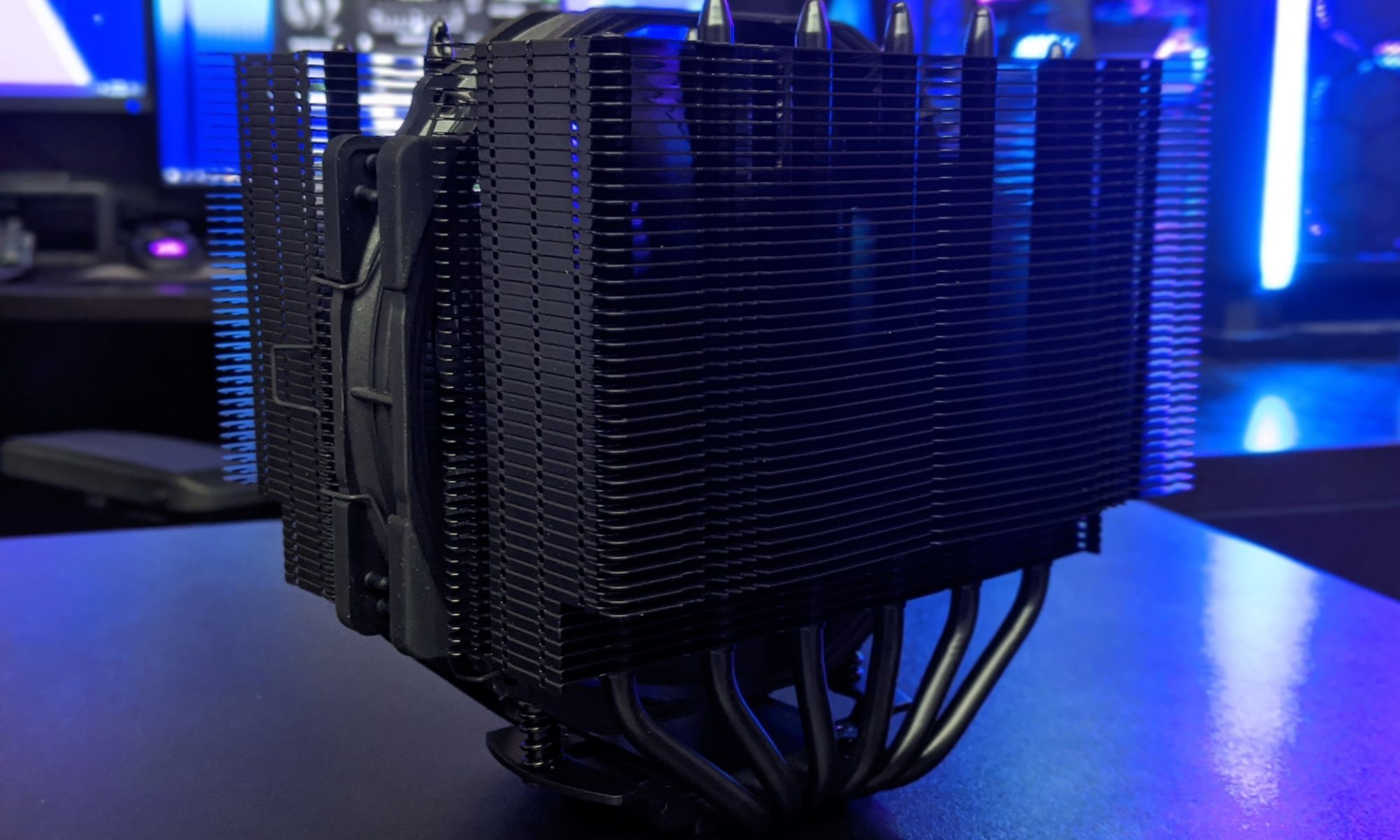
A 240 mm liquid cooler and a large dual-tower air cooler can perform similarly in some systems, while a poorly mounted premium cooler can lose to a cheaper model. The contact pressure, spread of thermal paste, flatness of the heat spreader and position of the cold plate all affect heat transfer. A cooler cannot compensate for a small contact area or an uneven mounting system.
The CPU’s heat density matters as well. Many current desktop processors concentrate multiple chiplets or a high-power core complex beneath a relatively small integrated heat spreader. Heat can reach the cooler quickly while still producing high local hotspots. The reported core temperature may therefore rise rapidly even when the heatsink itself feels only moderately warm.
Case airflow changes the result further. A front intake blocked by a dust filter, a top radiator exhausting into a warm room or a graphics card dumping heat underneath the CPU can add several degrees. In Sydney or Melbourne during a warm afternoon, a room temperature of 28°C leaves far less thermal headroom than a winter test at 20°C, regardless of the cooler used.
How Motherboard Settings Expose Variation
Automatic motherboard settings are a common reason two supposedly identical systems behave differently. Load-line calibration can raise voltage under demanding workloads, while multicore enhancement or board-specific boost rules may allow all cores to operate above the processor’s intended power envelope. Memory overclocking can add a smaller amount of heat, though it may influence the system’s overall airflow and socket temperature.
Firmware versions also matter. A BIOS update can change boost behaviour, default power limits, fan control or the way temperature sensors are interpreted. The same CPU may therefore produce different results after a board update without any physical change to the cooling hardware.
For a fair comparison, record package power, effective clocks, core voltage, ambient temperature and workload duration. Comparing only the hottest core reading hides important context. Two CPUs at 90°C are not equivalent if one consumes 125 watts at a higher clock and the other consumes 170 watts while throttling.
Reading Temperatures Without Jumping To Conclusions
Temperature spikes are normal when a processor rapidly boosts a small number of cores. Light desktop activity can create brief jumps into the 70s or 80s Celsius because the chip responds quickly to short tasks. A steady ten-minute render or stress test tells a different story from opening a browser tab.
Monitoring software may report several values, including CPU package temperature, core temperature, motherboard socket temperature and a hotspot figure. These sensors are useful for different purposes and may update at different speeds. Look for repeatable patterns rather than treating one screenshot as proof of a cooling problem.
Noise and clock stability deserve equal attention. A CPU that briefly reaches 95°C but maintains its advertised boost may be operating as designed. A cooler-running system that repeatedly drops frequency because of power or current limits may deliver lower performance. Check benchmark scores, effective clocks and fan speed alongside temperature.
What Australian Builders Should Check
Australia’s climate makes ambient temperature an important part of any comparison. Brisbane and Darwin can deliver warm, humid conditions for much of the year, while Perth, Adelaide and inland areas may experience hot dry periods that encourage dust accumulation. Air conditioning can make a large difference, so a test performed in an air-conditioned room is not directly comparable with one run in a warm spare room.
Local purchasing conditions also affect troubleshooting. Australian retailers commonly advertise CPUs and coolers with GST-inclusive prices, and replacement parts may involve shipping delays between capital cities and regional areas. Under the Australian Consumer Law, products must be of acceptable quality and match their description, but normal variation between two correctly functioning CPUs is different from a component that fails specifications or becomes unstable at stock settings.
Before requesting a return, restore the BIOS to documented defaults, update firmware, reseat the cooler and test with a known-good fan profile. Keep screenshots of package power, temperatures and clock behaviour. That evidence helps separate a silicon characteristic from a defective motherboard, damaged cooler pump or inaccurate sensor.
Learning the basics of electronics, cooling and measurement can make this process less frustrating; broad structured learning resources can help younger builders and newcomers develop that foundation before changing advanced firmware settings.
A Practical Tuning Checklist
The goal is not always to force the lowest possible temperature. A sensible setup balances performance, acoustics, stability and component longevity. Many CPUs respond well to a modest undervolt or a lower power limit, though the safe settings depend on the platform and should be validated with realistic workloads.
Change one setting at a time and record the result. Run a repeatable benchmark, then test the games or applications that matter to you. A setting that survives a short synthetic test may still fail during a long compile, video export or hot Australian summer session.
- Reset the BIOS to stock settings before diagnosing unusual temperatures.
- Confirm the cooler pump or fan is connected to the correct header and operating at the expected speed.
- Reinstall the cooler with an even mounting pattern and an appropriate amount of thermal paste.
- Compare package power and effective clock speed, not temperature alone.
- Test with a consistent ambient temperature and record the room conditions.
- Try a moderate power limit or undervolt, then validate stability with sustained workloads.
- Keep the case filters, heatsink fins and intake fans clear of dust.
A hotter sample is not automatically inferior. If it reaches the expected performance within its thermal and power limits, the difference may simply reflect normal manufacturing variation. The useful question is whether the processor is stable, quiet enough for the system’s purpose and performing as expected under repeatable conditions.