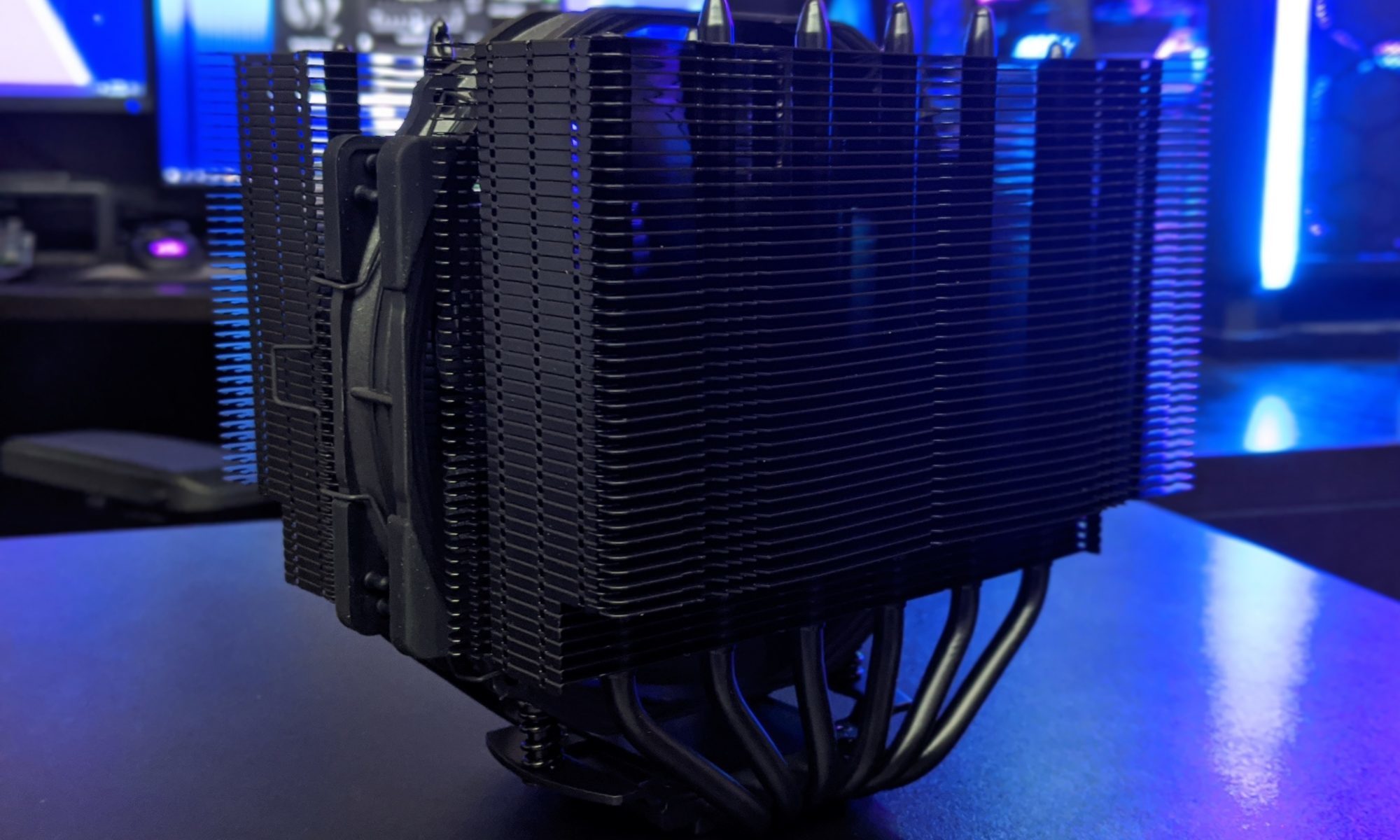
92mm vs 120mm tower coolers: does size mean quiet?
Choosing an air cooler for a gaming or work PC often comes down to two headline numbers: fan diameter and advertised noise. Those figures hide the variables that matter most, including the heatsink, fan curve, CPU power, case restrictions and the distance between your ears and the fan. A cooler that wins a laboratory chart can still be the wrong choice in a compact Australian build.
The short answer is no: a larger 120mm fan is not automatically quieter. At the same airflow target, a well-designed 120mm fan may spin more slowly and produce less acoustic noise than a 92mm model forced to work hard. The reverse is also possible, particularly when the smaller fan uses a quieter motor or the larger fan has an aggressive blade design.
For buyers, the useful comparison is measured performance at equal CPU temperature and power, rather than diameter alone. That means checking noise in a finished case, watching boost behaviour under load and allowing for Australian ambient temperatures, many of which are higher than the 21 to 24°C used in cool laboratory rooms.
The real acoustic comparison
A 92mm and 120mm fan can produce similar airflow, but they reach that point at different speeds. Moving more air generally requires more RPM, and fan noise rises quickly with speed because motor vibration, blade turbulence and tip noise all increase. If the 120mm option completes the job at 900 RPM while the 92mm option needs 1,400 RPM, the larger fan is likely to be the quieter choice in that system.
Perceived sound is also shaped by tone and measurement distance. A broad whoosh from a large fan may mask sharper bearing or motor noise, while a compact fan can sound conspicuous beside keyboard clicks or a microphone. Compare both at the same listener position, preferably with the case fans and room noise included; recent hardware news and product changes are covered in Hardware Hounds' recent hardware news, but manufacturer labels alone are not a substitute for a repeatable test.
Airflow, heat and the limits of scale
Fan size is only one part of the cooler. The heatpipes transfer energy from the CPU to the base, and the fin stack must release that energy into moving air. A dense array of narrow fins can improve heat dissipation while raising resistance, so a fan with sufficient static pressure may be needed to push air through the sink. The relationship between surface area, fin spacing and airflow is explained clearly in Dimela thermal design notes.
A wider fan can lower the speed needed to feed a large heatsink, reducing noise and helping the CPU sustain higher boost clocks. Yet the extra cooling capacity has no value if the processor draws little power. Adjusting power limits or undervolting, where the processor permits it, can sometimes let the smaller cooler remain quiet. Conversely, a hot, high-power CPU can force even a large 120mm fan into a noisy range.
Fit, clearance and the Australian build
The strongest case for 92mm is often physical. A smaller tower leaves more clearance over tall memory modules, side-mounted PCIe cards and the rear of a compact mATX case. A 120mm tower may sit higher, obscure a large RGB memory heat spreader or conflict with a glass side panel. Always measure cooler height from the motherboard CPU socket and leave the specified case clearance, because compact cases sold through Australian retailers are not automatically compatible with oversize imported coolers.
Local availability matters too. Australian buyers often compare AUD prices including GST, stock depth and the chance of dealing with an unfamiliar importer rather than a local authorised retailer. A cheaper imported 120mm tower may have a thin manufacturer warranty or slow replacement parts, while a 92mm model in stock from a familiar shop can be the better-value purchase. Checking spare fan and heatpipe availability can be as useful as comparing peak airflow.
Benchmarks beyond the decibel number
A useful comparison holds the processor, workload, room temperature and case configuration constant, then records package power, core temperatures, maximum boost and noise. Temperature alone can mislead: a cooler may silence the CPU by holding it below a boost threshold, or run quietly at the cost of lower clock speed. Fan RPM, CPU throttling and sustained watts should sit beside the dBA figure in any serious review.
Noise also needs a fixed reference. The same fan can look much louder in a quiet apartment than in a busy office, and adding a second case fan may reduce component temperatures while increasing total sound. Before upgrading the heatsink, builders checking an older gaming GPU can use the GTX 16-series esports guide to see whether frame rates are constrained elsewhere; a quieter CPU cooler cannot repair a graphics bottleneck.
Everyday use in Australian homes
In Sydney and Melbourne apartments, open-plan rooms and close neighbours make a low fan speed valuable, especially for late-evening gaming or recording. Humidity does not change the basic physics of an open-air tower cooler, but Brisbane's subtropical summer nights often keep room temperature high enough to reduce cooling headroom. Running a ceiling fan can improve comfort, yet it cannot remove the heat a tower cooler ultimately exhausts back into the room.
Perth's dry conditions bring the opposite concern: dust. A removable dust filter and a fan that can be cleaned without pulling the entire tower apart are practical features, not cosmetic extras. Australian electricity prices also make sustained CPU power worth watching, although a fan's own draw is usually modest. Comparing tariffs through the Energy Made Easy service helps put running costs in context; a cooler that enables lower voltage and fewer throttling watts may save more than the difference between two small fans.
Choosing the quieter value
A 92mm tower is often the smarter option for a mid-range gaming CPU, a compact case or a system with tall RAM. It may deliver acceptable thermals with a gentler fan curve and occupy less space. A 120mm tower earns its place when the processor is powerful, the case has room, sustained loads expose the smaller sink's limits, or a larger fan can run at a materially lower RPM than any practical 92mm alternative.
Fan quality and tuning can overturn the size rule. A smooth-bearing 92mm fan with a broad RPM range may beat an aggressive 120mm model, while a 120mm unit paired with a well-matched dense heatsink may do the same work with less noise. Support for a low minimum RPM, a useful PWM range and replaceable fan hardware matters more than a large diameter printed on the box.
Australian Consumer Law provides consumer guarantees for faulty goods, and a manufacturer's warranty cannot remove those statutory rights. This makes measured claims and local support particularly relevant when purchasing an imported cooler. If a listing says near-silent performance, buyers should look for test data, warranty terms and compatible parts rather than treating the phrase as a measurable specification.
For most Australian gaming PCs, a well-tuned 92mm tower offers the strongest balance of quiet operation, clearance and value; a 120mm model is the better tool when measured cooling demand justifies its extra size and cost.