DeepCool Assassin IV vs Peerless Assassin: High-TDP Cooler Test
Large air coolers remain a compelling choice for powerful desktop processors. They avoid pump wear, reduce the number of moving parts in a build, and can deliver excellent sustained performance without the cost of a large liquid loop. The challenge is finding the point where premium construction stops translating into meaningful thermal gains.
DeepCool’s Assassin IV and Thermalright’s Peerless Assassin represent two very different approaches to that question. The Assassin IV is a premium dual-tower cooler with a distinctive shrouded design, while the Peerless Assassin 120 SE focuses on a proven heatsink layout and aggressive pricing.
Both are capable choices for high-performance CPUs, including modern Ryzen 9 and Core i7 or Core i9 processors. Their differences become clearer when power limits, noise levels, memory clearance, case dimensions, and purchase price are considered together. Readers tracking the wider cooler market can also browse the site’s hardware news archive for related product updates.
What These Dual-Tower Coolers Bring
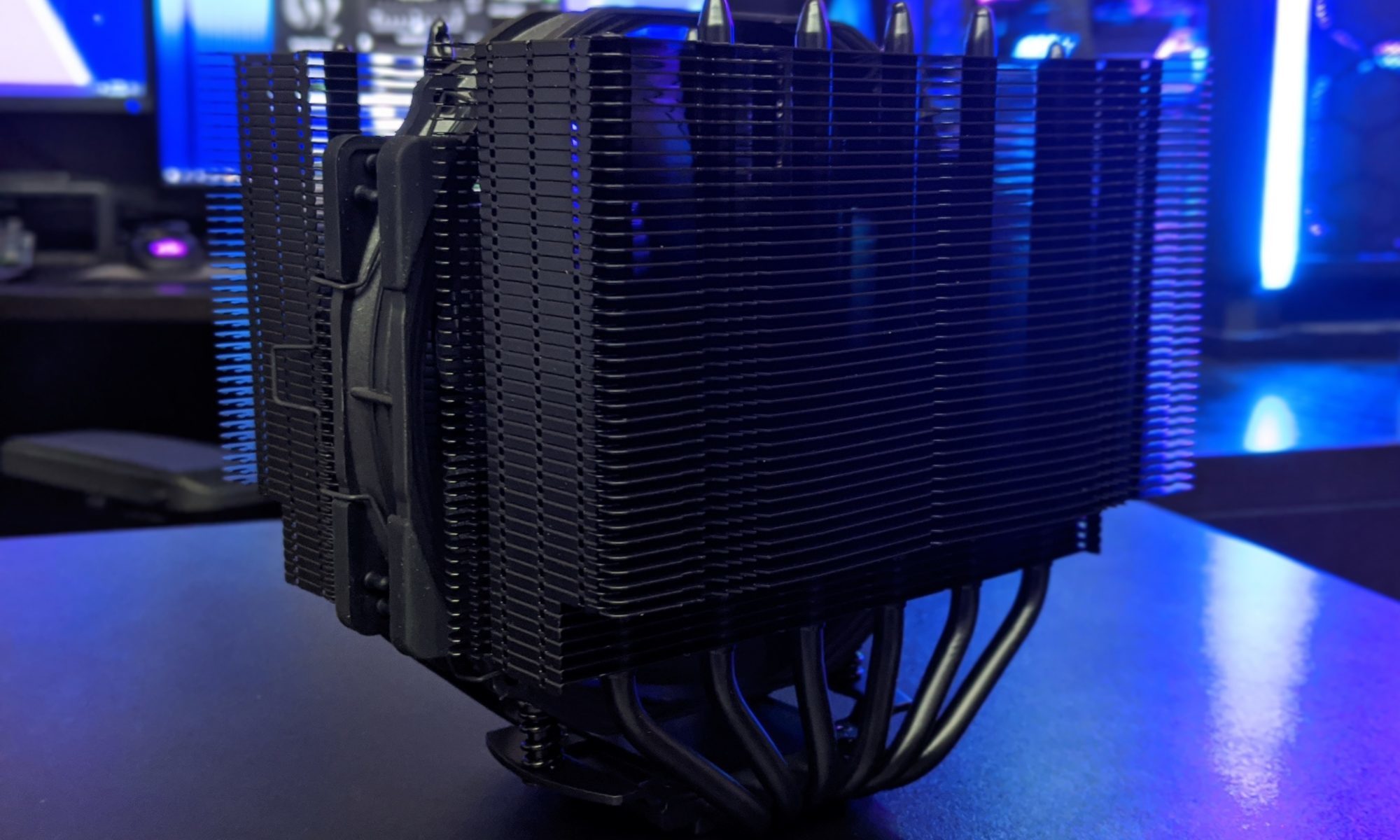
The Assassin IV is the more imposing product. Its asymmetric fin stack uses a larger primary tower and a smaller secondary tower, with a 140 mm fan positioned between them and a 120 mm fan near the rear. A top cover gives the cooler a cleaner appearance than most exposed heatpipe designs, while the seven heatpipes spread heat across both fin stacks.
Thermalright’s Peerless Assassin 120 SE uses a more familiar twin-tower arrangement with six heatpipes and two 120 mm fans. It looks less refined, but the underlying design is efficient: heat moves from the CPU into two dense fin arrays, and the fans push air through them in series. The simpler construction also keeps weight, price, and replacement cost down.
The Assassin IV feels like a flagship air cooler, with a substantial mounting system and a more controlled visual design. The Peerless Assassin feels like an enthusiast favorite built around thermal efficiency rather than presentation. Neither relies on software, proprietary control hubs, or a pump, which makes both straightforward to manage through motherboard fan headers.
Installation And Platform Compatibility
Installation is easier on the Peerless Assassin once the mounting hardware is understood. The cooler is large, but the bracket system is conventional, and the two fans can be moved vertically to clear memory modules. Its approximately 155 mm height fits many mid-tower cases, though buyers should still check the case specification before ordering.
The Assassin IV is taller at roughly 162.5 mm and occupies more space around the socket. Its offset layout improves memory access on some boards, but the cooler’s broad body can still interfere with tall DIMM heat spreaders or oversized VRM heatsinks. The included fan arrangement is tidy, although adjusting the rear fan may require removing the top cover.
Socket support depends on the revision and included mounting kit. Both coolers are commonly sold with hardware for current AMD AM5 and Intel LGA1700 systems, while support for newer platforms can vary by production batch. Check the retailer’s compatibility list instead of assuming an older box includes the latest bracket.
| Feature | DeepCool Assassin IV | Thermalright Peerless Assassin 120 SE |
|---|---|---|
| Cooler type | Dual tower, dual fan | Dual tower, dual fan |
| Heatpipes | Seven | Six |
| Fan arrangement | 140 mm center, 120 mm rear | Two 120 mm fans |
| Approximate height | 162.5 mm | 155 mm |
| Memory clearance | Better with offset design, but still limited by height | Adjustable front fan, often easier to adapt |
| High-load character | Strong sustained cooling with lower fan speed | Excellent performance for its price |
| Typical street position | Premium air cooler | Budget-to-midrange value leader |
Thermal Performance At High Power
The Assassin IV has an advantage when both coolers are asked to dissipate sustained heat from a high-TDP processor. Its larger central fan can move substantial air at moderate speed, and the additional heatpipe gives the fin stack more heat-spreading capacity. Under extended rendering or compilation workloads, that can translate into lower peak temperature or a modestly higher all-core clock.
The difference is rarely dramatic. The Peerless Assassin 120 SE is unusually competitive because its fin area and dual-fan airflow are well matched. With a processor drawing around 180 to 220 watts, it can remain within a few degrees of the DeepCool cooler in many open-air or well-ventilated cases. At the upper edge of power consumption, the Assassin IV’s larger mass and fan capacity become more valuable.
Cooling results depend heavily on motherboard behavior. Many boards allow Ryzen or Intel processors to use short-duration boost power well above their advertised TDP, so a cooler that performs well at 125 watts may struggle when the same CPU sustains 200 watts. The following comparison reflects the expected pattern in a controlled high-load test rather than a universal temperature guarantee.
For a high-TDP CPU, the most useful measure is sustained performance rather than a brief benchmark peak. Both models can handle gaming loads comfortably, since games often produce lower and more variable CPU power than all-core stress tests. Heavy workstation use gives the Assassin IV a clearer reason to exist.
Noise, Fans, And Real-World Behavior
Acoustically, the Assassin IV is usually the more relaxed cooler. Its 140 mm fan can produce the required airflow at a lower rotational speed, and the shrouded design helps give the product a finished, less exposed appearance. At moderate CPU power, it can maintain a low acoustic profile while keeping temperatures under control.
The Peerless Assassin’s two 120 mm fans may need to spin faster during prolonged high-current workloads. That does not make the cooler loud by default; its noise depends on the motherboard fan curve, case airflow, and processor power limits. A sensible curve can keep it quiet during browsing and gaming, with audible ramping reserved for intensive workloads.
Fan character also matters. The Thermalright fans offer strong airflow for their cost, but bearing tone and motor noise can vary more between samples than on a premium cooler. DeepCool’s fans feel more polished and better integrated into the product, although replacing them is more expensive. Both coolers can benefit from a gradual fan curve that avoids rapid speed changes around the CPU’s normal boost fluctuations.
Case airflow remains critical. A front intake path, unobstructed mesh panel, and rear exhaust fan can narrow the gap between these heatsinks. In a restrictive case with a solid front panel, the Assassin IV’s extra capacity will not fully compensate for warm air recirculation.
Value For Different Builds
The Peerless Assassin 120 SE is the stronger value proposition for most builders. It commonly sells at a fraction of the Assassin IV’s price while delivering cooling that is close enough for many gaming systems and productivity PCs. That money can instead fund a larger SSD, faster memory, or a better case fan setup.
Its limitations become easier to accept when paired with a sensible power target. A Ryzen 7 processor, Core i5, or moderately tuned Ryzen 9 is well suited to the Thermalright cooler. Even a hotter chip can work well if the motherboard’s unlimited power settings are adjusted and the case has good airflow.
The Assassin IV makes more sense when a system spends hours under all-core load, when low fan speed is a priority, or when the builder prefers a more refined physical design. It is also attractive for users who want additional thermal headroom without moving to liquid cooling. The premium is harder to justify for a gaming-focused PC where the CPU rarely sustains maximum package power.
Neither cooler should be selected without checking physical dimensions. The Assassin IV’s height can rule it out in compact mid-towers, while the Peerless Assassin’s front fan may cover tall memory modules unless it is raised. Raising that fan can increase total cooler height, so the case measurement must include the final fan position.
Buying Recommendations
The best choice depends on processor power, workload, case layout, and local pricing. A cheaper cooler that fits correctly and receives a good fan curve is preferable to an oversized model installed in a poorly ventilated enclosure.
Use these recommendations as a practical buying guide:
- Choose the DeepCool Assassin IV for sustained rendering, code compilation, simulation, or other workloads that keep a high-end CPU near its power ceiling.
- Choose the Peerless Assassin 120 SE for gaming systems and mainstream productivity builds where value is more important than the last few degrees.
- Confirm cooler height, RAM clearance, and socket bracket support before ordering either model.
- Set a sensible CPU power limit and fan curve instead of relying on factory motherboard settings.
- Replace or reposition case fans if internal air temperature remains high under load.
For most high-TDP desktop builds, the Assassin IV is the stronger technical performer and the quieter premium option. The Peerless Assassin is the smarter purchase when its lower price delivers nearly the same practical experience. Choose the DeepCool model when sustained heat and acoustic refinement matter most; choose Thermalright when performance per dollar is the deciding factor.
Check your case clearance, socket hardware, and processor power behavior before placing the order, then match the cooler to the workloads your PC will actually run. That approach delivers a cooler, quieter, and better-balanced system than choosing by brand reputation or appearance alone.